
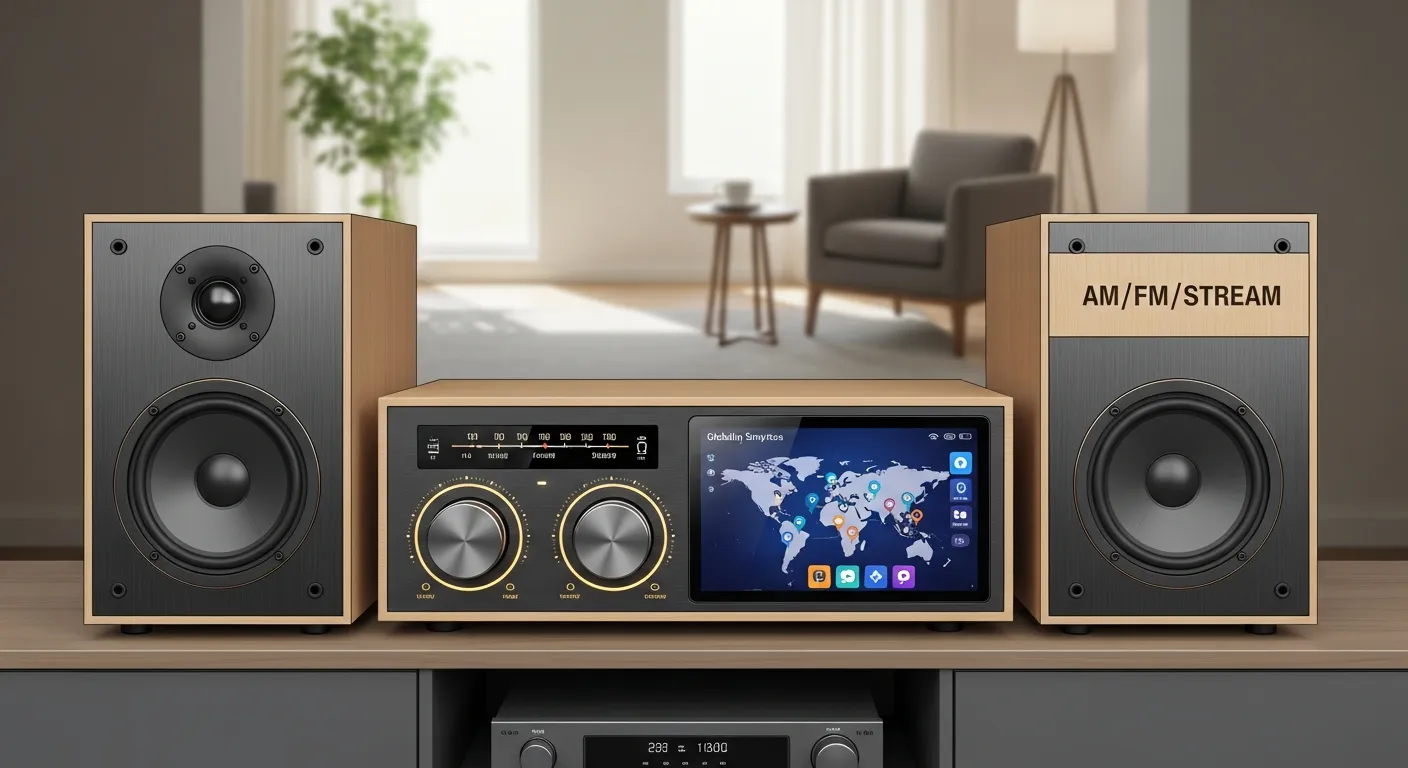
Radio remains a vital medium blending traditional AM/FM broadcasting with modern internet streaming. A high-quality AM/FM radio tuner enhances sound, integrates digital features, and offers access to global stations for immersive listening experiences today worldwide.
Radio remains a cornerstone of human communication and entertainment. Long before smart devices connected every corner of the globe, invisible electromagnetic waves brought news, music, and storytelling directly into our living rooms. Even as digital algorithms dominate modern media consumption, the authentic experience of a live broadcast holds a unique and powerful appeal. People actively seek the joy of tuning a physical dial and stumbling upon a new favorite song, enjoying a refreshing break from strictly curated playlists.
Finding the perfect balance between traditional broadcasting and modern internet connectivity is easier than ever. A high-quality AM/FM radio tuner provides a direct, tangible connection to local events, community discussions, and specialized music programming. At the same time, it integrates seamlessly with your home network, allowing you to access a universe of content far beyond your geographic location.
This comprehensive guide explores the fascinating mechanics behind analog and digital broadcasting. We will examine the essential features you need in a modern AM/FM radio tuner, practical ways to optimize your listening setup, and how modern software successfully bridges the gap between classic radio waves and digital convenience.
The Evolution of Broadcasting Technology
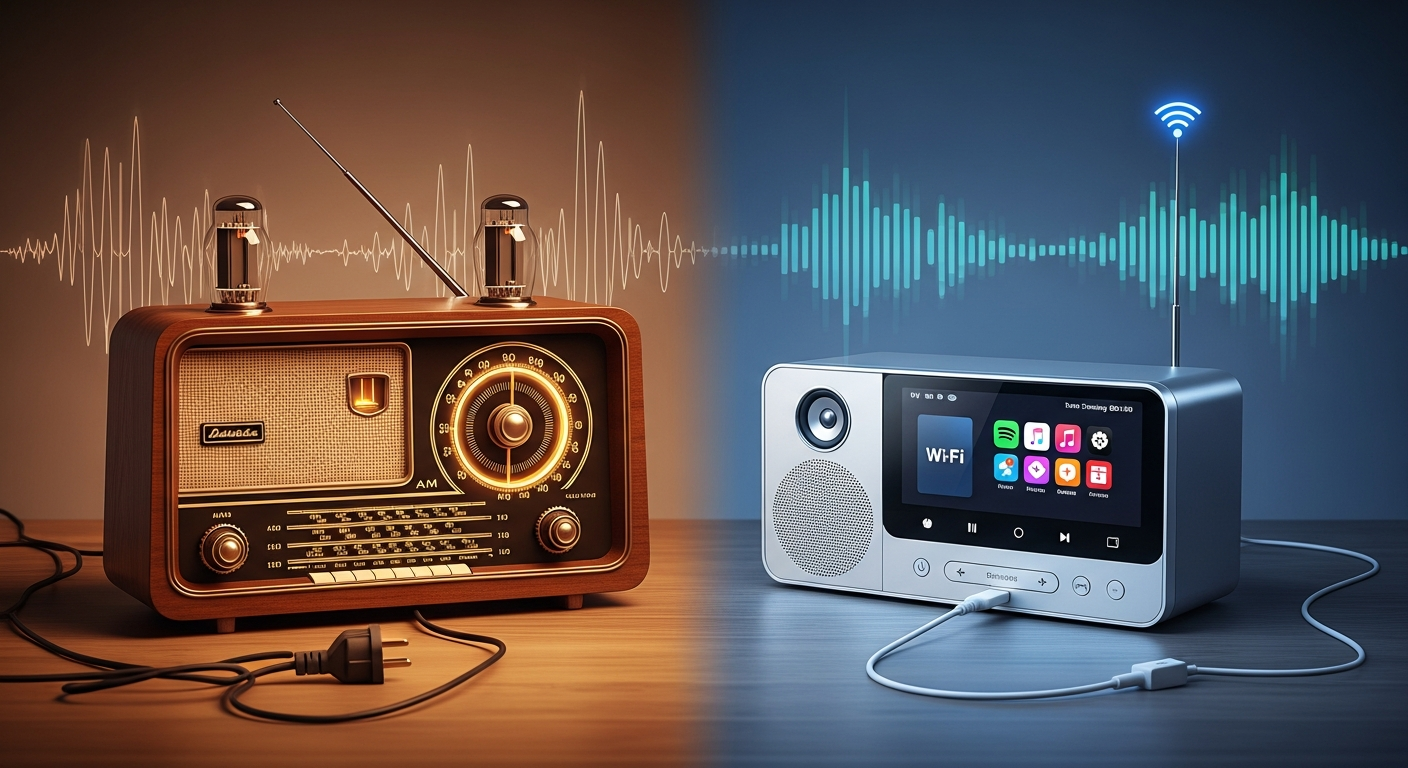
To appreciate a modern AM/FM radio tuner, you must first understand the fundamental physics that make broadcasting possible. Both AM and FM rely on modulating electromagnetic waves to transmit audio data, but they achieve this through entirely different methods.
Understanding AM and FM Basics
Amplitude Modulation, or AM, represents the older of the two technologies. It works by varying the amplitude, or overall strength, of the radio wave while keeping the frequency constant. The primary advantage of AM radio is its impressive range. Because AM waves have longer wavelengths, they travel massive distances and bounce off the ionosphere, especially at night. However, AM radio is highly susceptible to static and interference from household appliances.
Frequency Modulation, or FM, varies the frequency of the wave to encode audio information while keeping the amplitude entirely constant. This method provides a massive advantage in audio quality and remains largely immune to electrical static. The main disadvantage is its limited range, as FM waves travel in a straight line and typically max out around 50 to 100 miles, depending on transmitter height.
The Rise of Online AM FM Radio Streaming
Physical limitations no longer dictate what you can hear. The introduction of online AM FM radio streaming fundamentally changed media consumption forever. By digitizing the audio feed at the source and transmitting it over the internet, broadcasters eliminate geographic boundaries entirely.
With online AM FM radio streaming, you experience the uncompressed nature of physical signals alongside the limitless reach of broadband data. A dedicated AM/FM radio tuner taps into these streams directly. It brings together local terrestrial signals and global digital feeds into one unified interface, providing endless listening options.
What Defines a Premium AM/FM Radio Tuner?
An AM/FM radio tuner is a sophisticated piece of audio equipment designed to extract the best possible sound from both the airwaves and your Wi-Fi network. It serves as the central hub for all your broadcasting needs, offering exceptional audio processing.
Bridging the Gap Between Classic and Digital
The debate between digital and analog tuners remains a passionate topic among audio enthusiasts. Traditional analog circuits provide a smoother, more natural sound profile. Digital tuners utilize microprocessors to scan and lock onto frequencies perfectly. A premium AM/FM radio tuner merges these two philosophies. You get the warm, analog reception for local stations and a powerful digital-to-analog converter (DAC) for processing online AM FM radio streaming content.
Key Features to Look For
When evaluating an AM/FM radio tuner, you should consider both its hardware and software capabilities carefully.
- Sensitivity and Selectivity: Sensitivity measures the tuner’s ability to pick up weak signals. Selectivity measures how well it isolates a specific station without interference.
- Network Connectivity: Built-in Wi-Fi and Ethernet ports are mandatory for accessing live radio stations online.
- High-Res Audio Support: Look for an AM/FM radio tuner that decodes FLAC, WAV, and high-bitrate streams.
- Multi-Room Integration: Many advanced tuners sync with smart speakers throughout your house for seamless audio.
Hardware Capabilities
Premium units incorporate robust amplification stages and heavy shielding. This shielding ensures that the internal Wi-Fi antennas do not interfere with the sensitive analog receiver inside your AM/FM radio tuner.
Software and Connectivity
The best tuners offer regular firmware updates to keep their internet directories current. They seamlessly transition between a local FM broadcast and an internet radio tuner app without skipping a beat, ensuring an uninterrupted listening session.
How an Internet Radio Tuner App Changes the Game
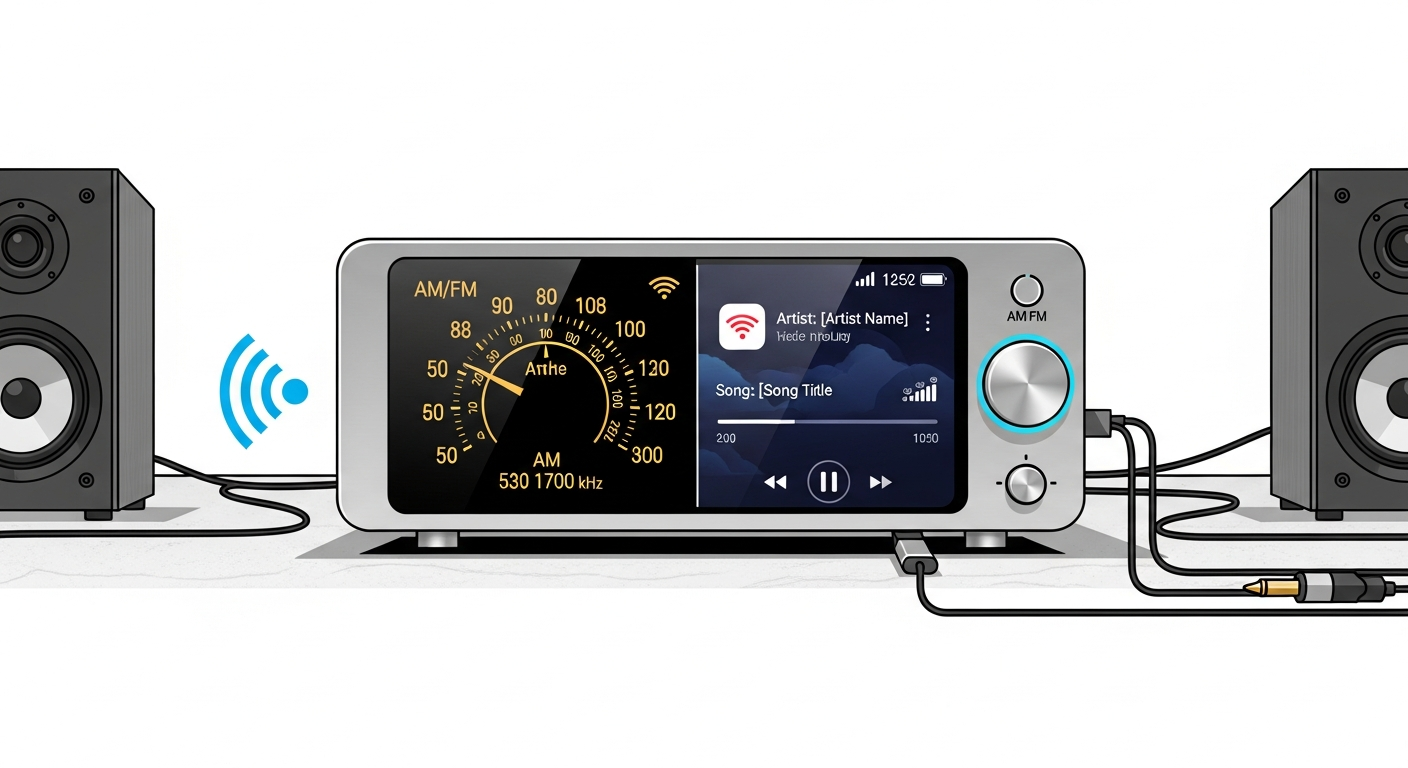
Your mobile phone or tablet often acts as the command center for your home audio setup. Utilizing an internet radio tuner app allows you to control your physical AM/FM radio tuner remotely while exploring a massive database of international broadcasts.
Convenience Meets High Fidelity
An internet radio tuner app essentially turns your smartphone into an advanced remote control. You can browse thousands of live radio stations online by genre, country, or language. Once you select a station on the internet radio tuner app, your physical AM/FM radio tuner takes over the heavy lifting. It streams the audio directly through its superior internal components rather than relying on your phone’s tiny, inferior audio chip.
Exploring Live Radio Stations Online
The sheer volume of live radio stations online is staggering and incredibly diverse. You can listen to local jazz from Paris, news from Tokyo, or college indie rock from Chicago in real-time. Tune into the BBC World Service live
Accessing live radio stations online breaks down cultural barriers and gives you immediate, unedited perspectives from around the globe. A solid AM/FM radio tuner catalogs these stations efficiently, allowing you to save favorites for instant access.
Comparing Digital Radio Player Apps and Hardware
Not everyone wants a dedicated physical unit in their living room. Let us compare using standalone digital radio player apps versus investing in a hardware AM/FM radio tuner.
|
Feature |
Digital Radio Player Apps |
Hardware AM/FM Radio Tuner |
|---|---|---|
|
Audio Quality |
Compressed, relies on phone DAC |
High-fidelity, dedicated DAC and shielding |
|
Terrestrial Reception |
None (Internet only) |
Excellent (Includes AM/FM antennas) |
|
Portability |
High (Works anywhere with cell data) |
Low (Designed for home theater integration) |
|
User Interface |
Highly visual, touchscreen based |
Physical buttons, dials, and remote control |
|
Initial Cost |
Free or low-cost subscription |
Moderate to high upfront investment |
Portability vs. Home Theater Integration
Digital radio player apps offer unmatched portability for active listeners. You can listen on your commute, at the gym, or in the office. However, for critical listening sessions in a dedicated media room, nothing beats a physical AM/FM radio tuner. It connects directly to your premium amplifiers and floor-standing speakers. This delivers an immersive soundstage that digital radio player apps simply cannot match when pushing audio through a standard Bluetooth connection.
Setting Up Your AM/FM Radio Tuner
Owning a great AM/FM radio tuner is only the first step. To truly enjoy online AM FM radio streaming and terrestrial broadcasts, you must optimize your physical setup correctly.
Antenna Optimization
Your antenna remains the most critical factor in physical radio reception. Indoor antennas work reasonably well if you live close to broadcast towers. However, household electronics easily disrupt them. For the best performance from your AM/FM radio tuner, mount an outdoor antenna on your roof. This placement gets the antenna above the noise floor of the house and provides a clear line of sight to local transmitters.
Network Configuration for Online AM FM Radio Streaming
Online AM/FM radio streaming depends heavily on a stable and well-configured network to deliver smooth, uninterrupted audio. Even small network issues can lead to buffering, lag, or sudden dropouts, which can quickly affect listener experience and retention.
To start with, you need a reliable internet connection with consistent speed. For most radio streams, a minimum upload speed of 128 kbps to 320 kbps per stream is required, depending on your audio quality (bitrate). However,
Wi-Fi vs. Ethernet
While Wi-Fi is convenient, it is highly susceptible to network congestion. If your AM/FM radio tuner features an Ethernet port, use a hardwired connection. Running a network cable directly from your router to the tuner guarantees maximum bandwidth. This is particularly important if you listen to high-resolution live radio stations online, which demand a steady, uninterrupted stream of data.
Exploring the World Through Live Radio Stations Online
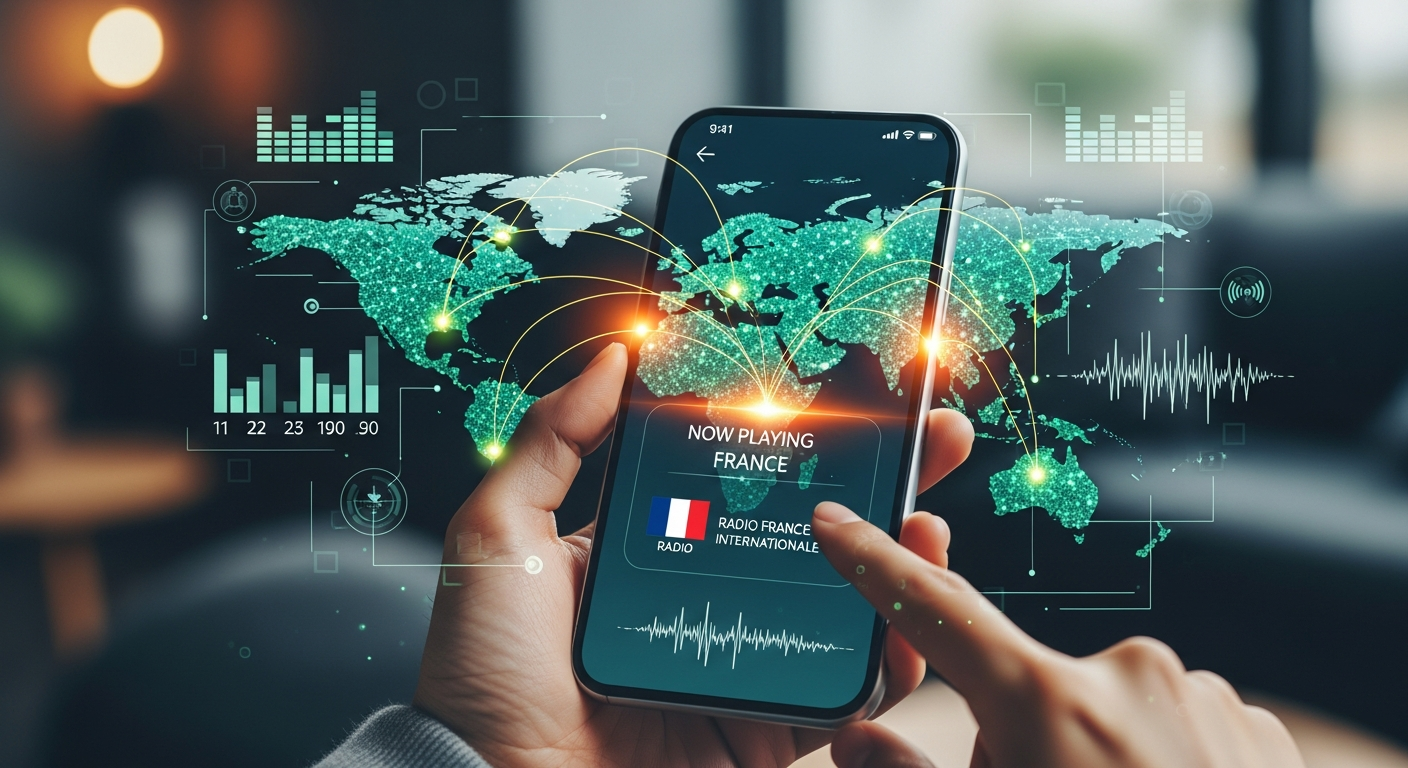
Once your setup is fully optimized, take the time to explore the digital dial. The radio spectrum is filled with hidden gems that go far beyond commercial pop and country.
Discovering Local and Global Content
Dedicate time to scanning the frequencies and searching through your digital directories. You will likely discover compelling programming you never knew existed. College radio stations broadcast eclectic, commercial-free music and introduce listeners to emerging artists. Live radio stations online provide immediate insight into regional politics and community concerns from communities thousands of miles away.
The Role of Metadata in Digital Radio Player Apps
One massive advantage of digital radio player apps and hybrid tuners is the inclusion of metadata. When you tune into a station, the display shows the song title, artist name, album art, and even the DJ’s information. This makes discovering and cataloging new music incredibly easy. Your AM/FM radio tuner aggregates this data, allowing you to build a highly personalized library of preferred broadcasters.
Expanding the Experience: Hardware and Accessories
Your AM/FM radio tuner serves as the source component, but the surrounding hardware dictates the final audio output quality.
Amplifiers and DACs
If your AM/FM radio tuner lacks a high-end internal DAC, you can bypass it using an optical or coaxial digital output. Run this signal into a premium external DAC or an integrated amplifier. This setup isolates the digital processing from the analog amplification, significantly lowering the noise floor and improving the dynamic range of your online AM FM radio streaming.
Speaker Placements
Position your speakers to create an equilateral triangle with your primary listening position. Keep the speakers slightly away from the walls to prevent muddy bass frequencies. A well-placed speaker system will reveal the subtle nuances of a live orchestra broadcast just as beautifully as it plays compressed live radio stations online.
The Future of the AM/FM Radio Tuner
The broadcasting landscape continues to shift rapidly, but the AM/FM radio tuner shows incredible resilience. Its future lies in adaptation and seamless integration.
Hybrid Broadcasting Solutions
Analog radio will increasingly coexist with digital broadcasting standards. We see a massive push toward hybrid solutions where an AM/FM radio tuner seamlessly switches from a weak FM signal to the station’s online AM FM radio streaming feed without the listener ever noticing a drop in audio. This guarantees an uninterrupted listening experience regardless of physical location.
AI and Algorithmic Discovery
Future digital radio player apps will feature highly sophisticated predictive AI. Instead of manually searching for live radio stations online, the software will analyze your listening habits and suggest niche global broadcasters that match your exact tastes. Your AM/FM radio tuner will become a deeply personalized curator of the world’s airwaves.
Frequently Asked Questions
What exactly is an AM/FM radio tuner?
An AM/FM radio tuner is a specialized audio component that receives analog over-the-air signals and often connects to the internet. This dual capability allows you to listen to local terrestrial broadcasts and global online streams from a single dedicated device. It acts as the ultimate bridge between classic radio and modern digital networking.
How does online AM FM radio streaming work?
Online AM FM radio streaming works by taking the analog audio from a broadcast studio and converting it into a compressed digital data packet. Your AM/FM radio tuner receives these packets over your internet connection, buffers them, and converts them back into analog audio. This allows you to listen to stations located anywhere in the world without relying on physical radio waves.
Can I control my tuner with an internet radio tuner app?
Yes, most modern networked tuners come with a dedicated internet radio tuner app that you install directly on your smartphone. This app allows you to change stations, adjust the volume, and manage your preset favorites from anywhere in your house. It serves as a highly visual, advanced remote control for your audio hardware.
Where can I find the best live radio stations online?
You can find thousands of live stations through built-in directories on your tuner or by using specialized aggregator applications. Explore top platforms for internet radio listeners
These platforms categorize broadcasters by genre, location, and popularity, making it incredibly simple to discover new global content.
Are digital radio player apps better than traditional hardware?
Digital radio player apps offer incredible convenience and portability, allowing you to listen anywhere using your mobile data connection. However, a traditional hardware AM/FM radio tuner provides significantly better audio quality and the ability to receive local analog signals when the internet is down. The best solution usually involves using a physical tuner at home and an app while traveling.
Do I need a special antenna for my AM/FM radio tuner?
To receive local AM and FM broadcasts clearly, you definitely need a proper antenna connected directly to your tuner. While a simple indoor wire antenna might work for strong local stations, an outdoor roof-mounted antenna provides the best defense against static. You do not need an antenna for the internet streaming features.
Why do some live radio stations online buffer or drop out?
Buffering usually occurs when your home internet connection is unstable, congested, or lacking sufficient bandwidth to process the audio. If you experience frequent dropouts, try moving your AM/FM radio tuner closer to your Wi-Fi router or switching to a hardwired Ethernet connection. Some stations also experience buffering if their broadcasting servers are overloaded.
Does an AM/FM radio tuner support high-resolution audio?
Many premium tuners on the market today are equipped with high-quality internal digital-to-analog converters that fully support high-resolution audio. They can easily decode lossless formats like FLAC or WAV if the broadcasting station provides a high-bitrate stream. Check the specific manufacturer specifications to ensure the tuner handles your preferred audio formats.
Can I listen to local AM stations using digital radio player apps?
You can only listen to local AM stations on digital apps if that specific station has chosen to simulcast their feed over the internet. While most major news stations provide online AM FM radio streaming, smaller local stations might only transmit over physical waves. In that case, you must rely on the analog receiver inside your AM/FM radio tuner.
How do I connect an internet radio tuner app to my stereo system?
If you use an app on your phone instead of a dedicated hardware tuner, you can connect your phone to your stereo using Bluetooth or AirPlay. However, routing the internet radio tuner app through a dedicated network streamer or physical AM/FM radio tuner yields vastly superior sound quality. This ensures your home theater receives the best possible audio signal.