
Web radio lets users stream global audio stations through the internet instead of traditional FM/AM signals. It offers better quality, unlimited station choice, and easy access on any device. The guide explains how it works, its benefits, station types, and how to start your own web radio station.
Music, talk shows, sports, and news once traveled only through the air. You needed an antenna, a tuner, and a bit of luck to get a clear signal. Now, all you need is an internet connection. Web radio has opened up a whole new world of listening, giving you thousands of stations from every corner of the globe right at your fingertips.
If you’ve ever wondered what is web radio and how it differs from the old-school dial, you’re in the right place. This guide breaks down everything in plain language. You’ll learn how it works, where to find the best internet radio stations, how to listen on any device, and even how to launch your own station. We’ll explore French stations, classic music channels, sports streams, and the technology that ties it all together.
By the end, you’ll understand why web radio has become the go-to choice for millions of listeners. Let’s tune in.
What Is Web Radio? Breaking Down the Basics
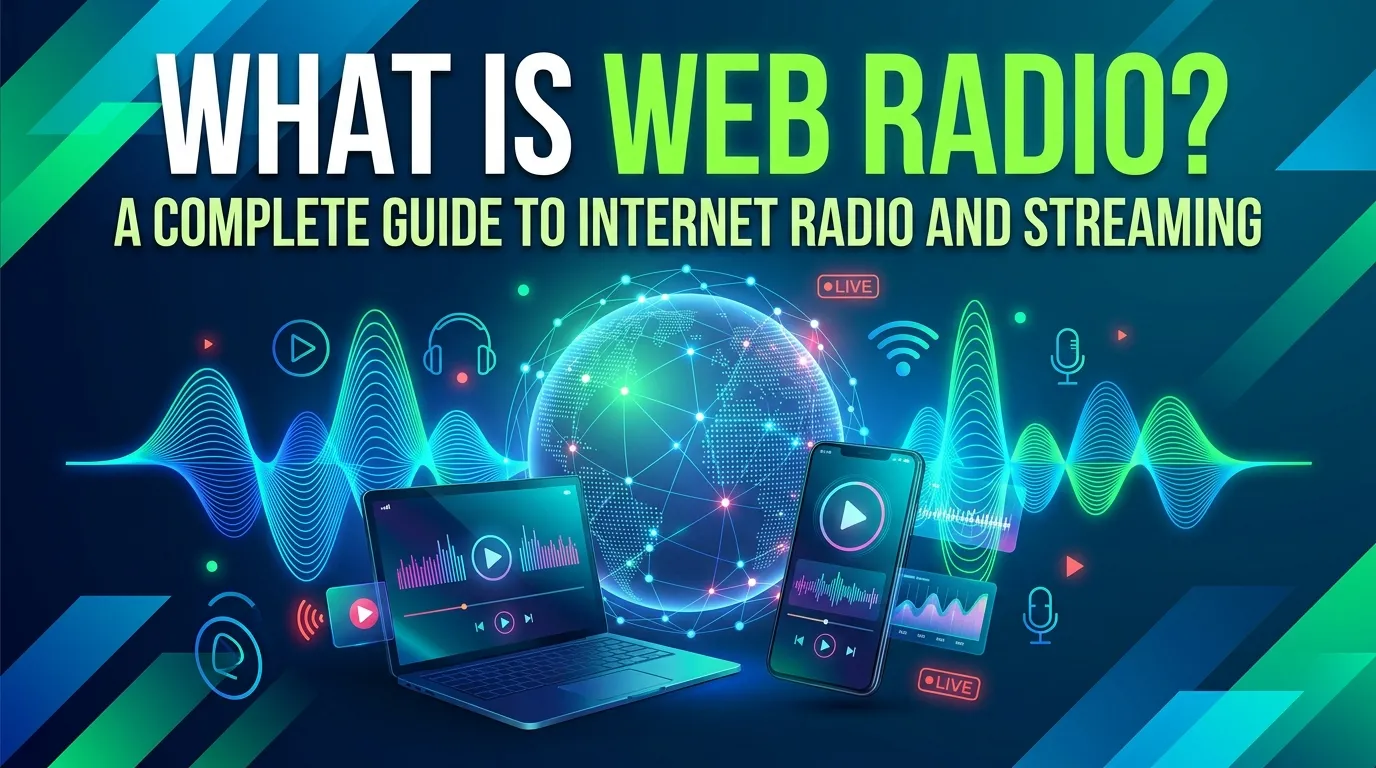
Web radio, also called internet radio, is audio broadcasting delivered over the internet instead of traditional airwaves. Rather than picking up signals through an antenna, you connect to a station’s audio stream online. This simple shift changes everything about how you listen.
Traditional AM and FM radio depend on physical transmitters with limited range. Move too far from the tower, and the signal fades. Web radio has no such limits. As long as you have an internet connection, you can listen to a station broadcasting from your hometown or from halfway around the world.
So when people ask what is web radio, the short answer is this: it’s radio without borders. The technology removes the distance barrier and opens up endless choice.
How Web Radio Differs from Traditional Radio
The core difference comes down to delivery. AM and FM use radio waves, while web radio uses data streams sent over the internet. This affects range, sound quality, and the sheer number of stations you can reach.
Here’s how the two compare:
- Range: Traditional radio is local, while web radio is global.
- Choice: FM dials offer a few dozen stations; web radio offers tens of thousands.
- Quality: Internet streams can deliver crisp, consistent audio without static.
- Features: Web radio often shows song titles, artwork, and station details.
- Access: You can listen on phones, computers, smart speakers, and more.
This combination of reach and flexibility is why so many listeners have made the switch. The old dial still has charm, but the web opens doors it never could.
The Role of Streaming Technology
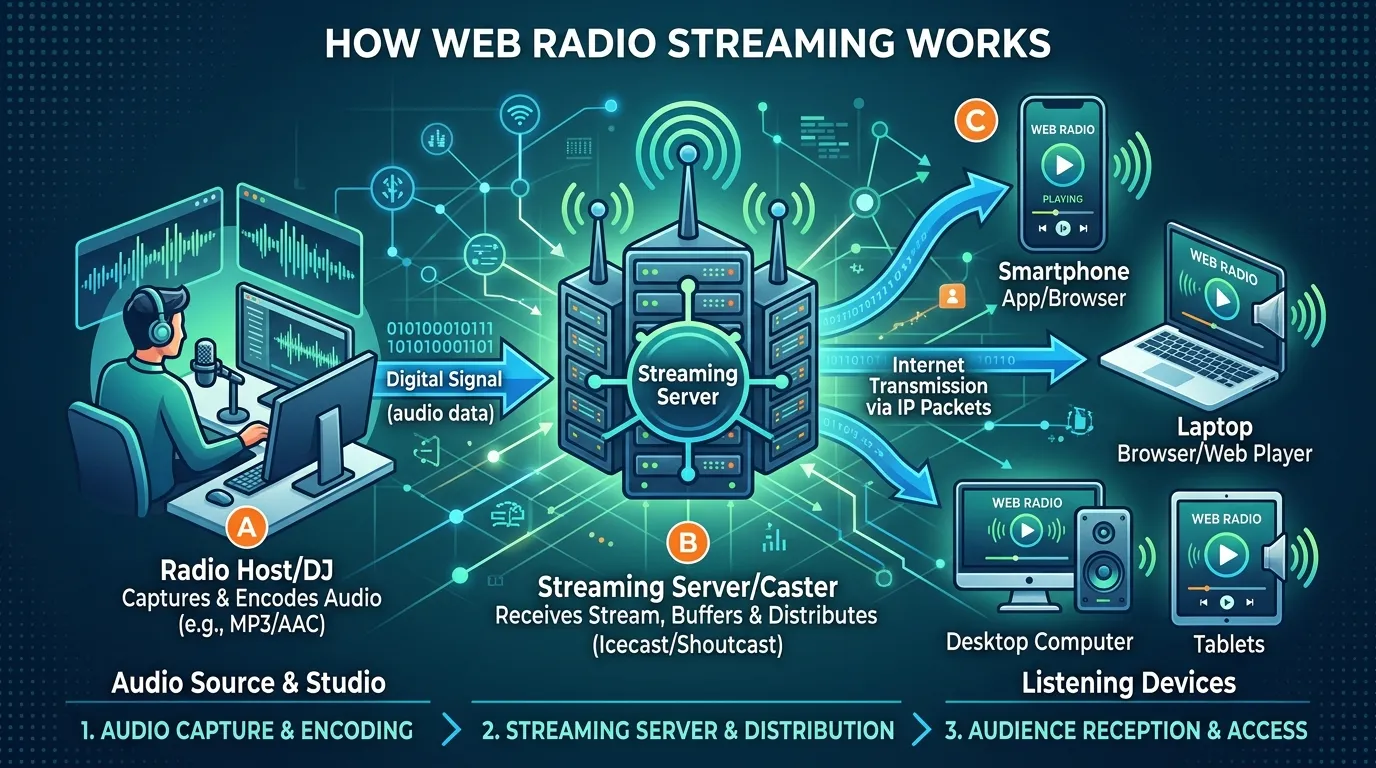
At its heart, web radio relies on audio streaming. A station encodes its audio into a digital format, then sends it out as a continuous data flow. Your device receives that flow and plays it in real time, with only a small buffer to keep things smooth.
This is the same basic idea behind music and video streaming services. The key difference is that web radio is usually live and continuous, much like a traditional broadcast. You tune in to a shared stream rather than picking individual tracks on demand.
A Brief History of Web Radio
Web radio isn’t brand new. It has roots stretching back to the mid-1990s, when the first online stations began experimenting with audio over slow dial-up connections. The sound was rough and the buffering was painful, but the idea took hold.
As broadband spread, the medium matured. Many beloved stations point proudly to roots in radio streaming since 2008, a period when faster connections and smartphones made online listening practical for everyday people. That era marked a turning point, moving web radio from a niche hobby into the mainstream.
From Dial-Up to High-Speed Streaming
In the early days, listeners tolerated frequent dropouts and low audio quality. Bandwidth was scarce, and encoding technology was still developing. Despite the hurdles, pioneers kept building stations and growing audiences.
The arrival of high-speed internet changed the game. Suddenly, streams could carry richer audio without constant interruptions. Mobile data then made it possible to listen anywhere, untethered from a desktop computer.
The Rise of Mobile and Smart Devices
The smartphone era supercharged web radio’s growth. Apps put thousands of stations in everyone’s pocket. Later, smart speakers made listening even easier, letting you summon a station with a simple voice command.
Today, web radio fits seamlessly into daily life. You can start a stream in the kitchen, continue it in the car, and finish it at your desk, all without missing a beat.
How Web Radio Works Behind the Scenes
Understanding the basics of the technology helps you appreciate what’s happening when you press play. The process involves a few clear steps, from the studio to your speakers.
First, a station captures audio, whether it’s music, a live host, or a prerecorded show. That audio gets encoded into a compressed digital format to keep file sizes manageable. The encoded audio then travels to a streaming server.
The server sends the stream out to listeners through a stream url link. Your device or app connects to that link, downloads a small buffer, and begins playing. The whole chain happens almost instantly, giving you smooth, continuous sound.
Understanding the Stream URL Link
A stream url link is the web address that points directly to a station’s audio feed. Think of it as the digital equivalent of a frequency on the dial. When you enter or click this link, your player connects straight to the live stream.
Many apps hide this link behind a friendly station name and logo. But the link is always working in the background. Advanced listeners sometimes use these links directly in media players to access stations that aren’t listed in popular apps.
Encoding, Bitrate, and Sound Quality
Sound quality depends heavily on bitrate, which measures how much data the stream uses per second. Higher bitrates generally mean richer, clearer audio. Lower bitrates save data but can sound thin or compressed.
Most stations balance quality and bandwidth to serve a wide audience. A typical music stream might run at a bitrate that sounds great on headphones while still working on slower connections. This balance keeps the listening experience smooth for everyone.
Finding the Best Internet Radio Stations
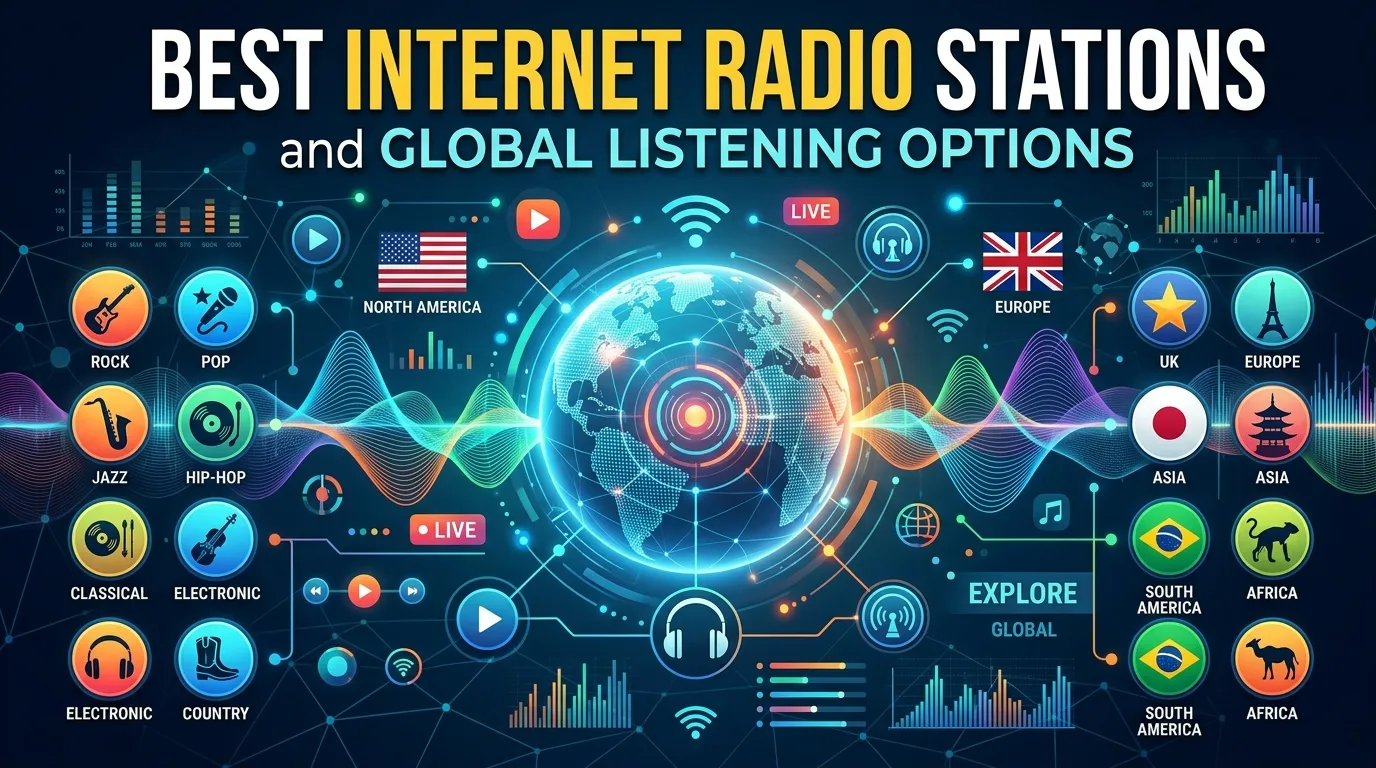
With so many options out there, discovery becomes half the fun. The best internet radio stations cover every taste imaginable, from deep techno to classical symphonies to local talk shows. The trick is knowing where and how to look.
Finding the best internet radio doesn’t have to be overwhelming. A few smart strategies help you cut through the noise and land on stations you’ll love. Once you find your favorites, most apps let you save them for quick access.
How to Discover Stations You’ll Love
Start by thinking about what you enjoy. Genre, language, location, and mood all help narrow the field. Most platforms let you browse by these categories, making it easy to explore.
Try these discovery tips:
- Browse by genre to match your musical taste
- Search by country to find local or foreign stations
- Explore curated lists of the best internet radio stations
- Check listener ratings and popularity rankings
- Follow recommendations based on your listening history
A little exploration goes a long way. You might stumble onto a niche station that becomes your new daily companion.
Popular Station Categories Worth Exploring
Web radio organizes content into clear categories, which makes browsing simple. Each category serves a different mood or interest. Understanding them helps you find exactly what you want.
Music Stations Across Every Genre
Music remains the backbone of web radio. You’ll find stations dedicated to single genres, decades, or even single artists. Whatever your taste, there’s almost certainly a station built for it.
For fans of timeless tunes, web radio classics stations deliver nonstop hits from past eras. These channels celebrate the songs that defined generations, perfect for nostalgia or background listening.
Sports and Talk Stations
Sports fans love web radio for live commentary and analysis. Stations like era sport web radio give followers play-by-play coverage and dedicated discussion. You can follow your favorite teams no matter where you are in the world.
Talk stations cover news, politics, culture, and hobbies. They keep you informed and entertained during commutes, workouts, or quiet evenings at home.
International and Niche Stations
One of the great joys of web radio is global access. You can sample stations from countries you’ve never visited. This is a wonderful way to learn new languages or discover foreign music scenes.
For example, french internet radio stations bring Parisian pop, jazz, and chanson straight to your speakers. Niche stations also thrive online, serving small but passionate audiences that traditional radio often overlooks.
Comparing Web Radio Formats and Listening Methods
Different listeners have different needs. Some want simple, casual listening, while others crave control and high quality. The table below compares common web radio formats and listening methods to help you find the right fit.
|
Format / Method |
Key Features |
Best For |
Ideal User |
|---|---|---|---|
|
Browser-based streaming |
No install, instant access |
Quick, casual listening |
Desktop users |
|
Mobile radio apps |
Portable, saved favorites |
On-the-go listening |
Commuters and travelers |
|
Smart speaker streaming |
Voice control, hands-free |
Home and multitasking |
Smart home owners |
|
Dedicated radio tuner apps |
Combines AM, FM, and web |
All-in-one listening |
Traditional radio fans |
|
Direct stream url link |
Raw stream access |
Custom setups |
Tech-savvy listeners |
|
Aggregator platforms |
Huge station libraries |
Easy discovery |
Explorers and newcomers |
This comparison shows there’s no single “right” way to listen. The best method depends on your devices, habits, and how much control you want over the experience.
Listening to Web Radio on Any Device
One of web radio’s biggest strengths is flexibility. You can tune in on nearly any device with an internet connection. This freedom lets you build listening into your daily routine without missing a thing.
Whether you prefer a phone, a computer, or a smart speaker, getting started is easy. Each device offers its own perks, so you can mix and match based on where you are.
Streaming Over Wi-Fi at Home
At home, Wi-Fi is your best friend. A solid radio web wifi setup lets you stream high-quality audio without using mobile data. You can fill any room with sound through speakers, computers, or smart devices.
Using radio web wifi also means stable connections and crisp playback. Since home networks usually offer more bandwidth, you can enjoy higher bitrates and richer sound. Pair your stream with good speakers, and your living room becomes a personal concert hall.
Mobile Listening on the Go
Smartphones make web radio truly portable. With a data connection or downloaded app, you can listen anywhere. Commutes, workouts, and travel all become better with your favorite stations along for the ride.
Mobile apps usually let you save stations, set sleep timers, and switch streams with a tap. Just keep an eye on data usage if you’re not on Wi-Fi, since continuous streaming can add up.
Using a Radio Tuner App
For people who love both old and new, a radio net am fm radio tuner app offers the best of both worlds. These apps combine traditional broadcast access with internet streaming in one place. You get local AM and FM alongside thousands of online stations.
A radio net am fm radio tuner is ideal if you want a single, simple hub for all your listening. You can flip between a local FM favorite and a distant web station without switching apps. This blend keeps the familiar feel of radio while adding the reach of the internet.
How Internet Radio Technology Connects It All
The technology behind web radio can seem complex, but plenty of clear resources exist to explain it. Understanding the basics helps you troubleshoot issues and appreciate the medium more deeply.
For a clear, beginner-friendly breakdown worth bookmarking, check this out:
How internet radio works
A simple guide to streams and servers.
Great for curious listeners and creators.
Perfect for understanding what is web radio at its core.
This kind of resource demystifies the process. Once you grasp how streams travel from studio to speaker, the whole system makes much more sense.
Notable Web Radio Stations to Explore
The web radio landscape is vast, with stations for nearly every interest. Some have built loyal followings over many years. Exploring a mix of well-known and niche stations helps you appreciate the full range of what’s out there.
A few station names pop up often among dedicated listeners. They’ve earned reputations for quality programming, reliable streams, and distinctive personalities.
Stations With Long-Standing Reputations
Many stations have operated for over a decade, proving their staying power. Channels with roots in radio streaming since 2008 often boast polished production and devoted communities. Their longevity speaks to consistent quality and trust.
Among the more unique names listeners encounter is radio web cabrito, a station that has carved out its own identity. Quirky, memorable stations like radio web cabrito show how web radio gives smaller broadcasters room to stand out. These independent voices add color and variety that big networks rarely match.
Genre-Focused Favorites
Some stations win fans by going deep on a single theme. A dedicated web radio classics channel, for instance, attracts listeners who crave golden oldies and timeless hits. By focusing tightly, these stations deliver exactly what their audience wants.
The same goes for sports. A focused era sport web radio stream serves fans who want nonstop coverage and commentary. This specialization is one of web radio’s greatest gifts, letting passionate audiences find their perfect match.
Discovering Hidden Gems
Beyond the popular names lie countless smaller stations waiting to be found. These hidden gems often run on passion rather than profit. They may feature local hosts, rare music, or unusual themes you won’t hear anywhere else.
Finding these stations takes a bit of curiosity. Dig through aggregator platforms, follow recommendations, and don’t be afraid to try something unfamiliar. The reward is a personal soundtrack no algorithm could fully predict.
How to Start a Web Radio Station
Maybe listening isn’t enough, and you want to broadcast your own voice. The good news is that launching a station is more accessible than ever. Learning how to start a web radio station takes some planning, but the barrier to entry is low.
You don’t need a fancy studio or expensive gear to begin. A computer, a microphone, and the right software can get you on the air. From there, you grow your audience and refine your sound over time.
Planning Your Station Concept
Every great station starts with a clear idea. Decide what you’ll broadcast and who you want to reach. A focused concept helps you stand out in a crowded space.
Ask yourself these questions:
- What genre or theme will define your station?
- Who is your target audience?
- Will you play music, host talk shows, or both?
- How often will you broadcast?
- What will make your station unique?
A strong concept guides every decision that follows. It shapes your content, your branding, and the community you build.
Gathering the Right Equipment and Software
Once your concept is set, you’ll need some basic tools. The essentials are simpler than many people expect. You can start small and upgrade as you grow.
Here’s a starter checklist:
- A reliable computer with a stable internet connection
- A decent microphone for clear vocals
- Broadcasting or encoding software
- A streaming server or hosting service
- Headphones to monitor your audio
This modest setup is enough to launch. Many successful stations began in spare bedrooms with gear like this before expanding.
Setting Up Your Stream and Hosting
To reach listeners, you need a streaming host. This service takes your audio and distributes it through a stream url link that people can access. Choosing a reliable host keeps your broadcast smooth and stable.
When picking a host, consider how to start a web radio station within your budget and audience size. Look at factors like listener capacity, bandwidth, and support. A good host scales with you as your audience grows.
Growing Your Audience
Launching is just the beginning. Building an audience takes consistent effort and promotion. Share your station across social media, forums, and aggregator platforms.
Consistency matters most. Stick to a schedule so listeners know when to tune in. Engage with your community, respond to feedback, and keep improving. Over time, your dedication turns casual listeners into loyal fans.
Tips for the Best Web Radio Experience
A few simple habits can make your listening smoother and more enjoyable. Whether you’re a casual listener or a daily devotee, these tips help you get the most from web radio.
Small tweaks to your setup and routine add up. With the right approach, you’ll enjoy reliable streams and easy access to everything you love.
Improving Stream Quality and Stability
Buffering and dropouts can frustrate any listener. Most issues come down to your connection. A few adjustments usually solve the problem.
Try these fixes:
- Use a stable radio web wifi connection when possible
- Close other bandwidth-heavy apps while streaming
- Lower the stream bitrate if your connection is slow
- Restart your router if streams keep cutting out
- Keep your apps updated for the best performance
These steps smooth out most playback problems. A stable connection is the foundation of a great listening experience.
Organizing Your Favorite Stations
As you discover more stations, keeping track gets harder. A little organization saves time and frustration. Most apps offer tools to help.
Save your favorites and group them by mood or genre. Create separate lists for work, relaxation, and exercise. This way, you can jump straight to the right station for any moment without endless searching.
Saving Data While Streaming
Streaming uses data, which matters on mobile plans. A few habits help you stay within your limits. Smart listening keeps costs down without sacrificing too much quality.
Lower the bitrate when you’re on mobile data, and switch to Wi-Fi whenever you can. Download offline content if your app allows it. These small choices protect your data plan while keeping the music playing.
The Future of Web Radio
Web radio keeps evolving as technology advances. New features and smarter platforms continue to improve the experience. The medium shows no signs of slowing down.
Personalization is growing, with platforms learning your tastes and suggesting stations you’ll enjoy. Integration with smart homes and cars makes listening even more seamless. As internet access spreads worldwide, web radio’s global reach will only expand.
Smarter Discovery and Personalization
Future platforms will likely get even better at matching you with stations. Improved recommendations mean less searching and more listening. The goal is to surface your perfect station before you even know it exists.
This personalization respects the spirit of radio while adding modern convenience. You still get the shared, live feel of a broadcast, now tuned more closely to your taste.
Web Radio in a Connected World
As more devices connect to the internet, web radio becomes ever more present. Cars, speakers, wearables, and appliances can all stream audio. This connectivity weaves web radio into the fabric of daily life.
The result is a future where your favorite stations follow you everywhere. From morning alarms to evening wind-downs, web radio is poised to remain a trusted companion.
Frequently Asked Questions
What is web radio in simple terms?
Web radio is radio broadcast over the internet instead of traditional airwaves. You connect to a station’s online stream rather than using an antenna. This gives you access to stations worldwide, not just local ones. As long as you have an internet connection, you can listen anywhere on almost any device.
How is web radio different from regular AM and FM radio?
Traditional AM and FM radio rely on physical transmitters with limited local range. Web radio uses internet streams, so distance doesn’t matter at all. This means you get far more stations, clearer audio, and extra features like song info. A radio net am fm radio tuner app can even combine both types in one place.
What are the best internet radio stations to start with?
The best internet radio stations depend entirely on your taste in music or talk. Start by browsing curated lists, popular charts, and genre categories. Try music channels, sports streams, and international stations to explore your options. Save your favorites so you can quickly return to the best internet radio you discover.
Do I need special equipment to listen to web radio?
No special equipment is required to enjoy web radio at home or on the go. Any phone, computer, or smart speaker with internet access works perfectly. A solid radio web wifi connection ensures smooth, high-quality playback. You can also use dedicated apps to organize and save your favorite stations easily.
What is a stream url link and how do I use it?
A stream url link is the direct web address pointing to a station’s live audio feed. It works like a digital frequency that connects you straight to the broadcast. Most apps hide this link behind a station name and logo. Tech-savvy listeners sometimes paste these links into media players for custom listening setups.
How can I find French internet radio stations online?
Finding french internet radio stations is easy through aggregator platforms and radio apps. Simply search by country or filter stations by the French language. You’ll discover everything from Parisian pop to jazz and classic chanson. Exploring foreign stations is a fun way to enjoy new music and practice a language.
Are there web radio stations for sports and classic music?
Yes, web radio offers dedicated stations for nearly every interest imaginable. Channels like era sport web radio focus on live coverage and commentary for fans. Meanwhile, web radio classics stations deliver timeless hits from past decades. This specialization lets passionate audiences find content built just for them.
How long has web radio been around?
Web radio dates back to the mid-1990s, though early streams were rough and slow. Many popular stations highlight roots in radio streaming since 2008, when broadband and smartphones made online listening practical. Since then, the medium has grown into a mainstream way to enjoy audio worldwide on countless devices.
Can I stream web radio without using too much data?
You can absolutely manage data while enjoying web radio on mobile plans. Lower the stream bitrate when using cellular data to reduce consumption. Switch to a radio web wifi connection at home whenever possible for unlimited listening. These simple habits keep your data costs down without spoiling your experience.
How do I start a web radio station of my own?
Learning how to start a web radio station begins with a clear concept and audience. You need a computer, a microphone, broadcasting software, and a streaming host. Your host distributes your audio through a stream url link to listeners. Start small, broadcast consistently, and promote your station to grow a loyal following.
What does radio web cabrito refer to?
Radio web cabrito is one of the many independent web radio stations with a distinct identity. Stations like radio web cabrito show how smaller broadcasters thrive online. They often feature unique themes, local flavor, or niche content you won’t hear elsewhere. Exploring these independent voices adds variety to your listening routine.
Why is a radio net am fm radio tuner app useful?
A radio net am fm radio tuner app combines traditional broadcast and internet streaming in one hub. You get local AM and FM stations alongside thousands of web stations. This blend suits listeners who love familiar radio but want global reach too. It’s a convenient, all-in-one solution for every kind of listening mood.
Final Thoughts: Tune Into the World of Web Radio
Web radio has transformed how we listen, breaking down the borders that once limited the dial. Now you understand exactly what is web radio, how it works, and why so many listeners have embraced it. From discovering the best internet radio stations to streaming over Wi-Fi or launching your own broadcast, the possibilities are wide open.
The beauty of web radio lies in its endless variety and effortless access. Whether you crave classic hits, live sports, French jazz, or your own unique station, the world is just a click away. Pick a station, press play, and enjoy the global soundscape that web radio brings right to your speakers.