

Discover how automation using AI is transforming industries through machine learning, intelligent workflows, and real-time decision-making. Learn about key technologies, business benefits, future trends, ethical challenges, and practical applications driving smarter, faster, and more efficient operations worldwide.
Automation has been a driving force behind human progress for centuries. From the earliest mechanical looms of the Industrial Revolution to the robotic assembly lines of the twentieth century, we constantly seek ways to make our work easier and more efficient. For a long time, automation was strictly about physical labor. Machines performed repetitive, predictable tasks based on a strict set of rules.
Now, the landscape is shifting dramatically. We are no longer just automating physical movement; we are automating cognitive processes. Automation using AI represents a massive leap forward. Instead of merely following pre-programmed instructions, modern systems can learn, adapt, and make decisions in real time without human intervention.
This shift fundamentally changes how businesses operate. It alters the way we interact with technology and redefines what is possible across almost every sector of the economy. Automation using AI is transforming industries and daily life, offering unprecedented efficiency and innovation for those willing to embrace it. This guide explores the core technologies, practical applications, benefits, and future trends of automation using AI.
The Fundamentals of Automation Using AI
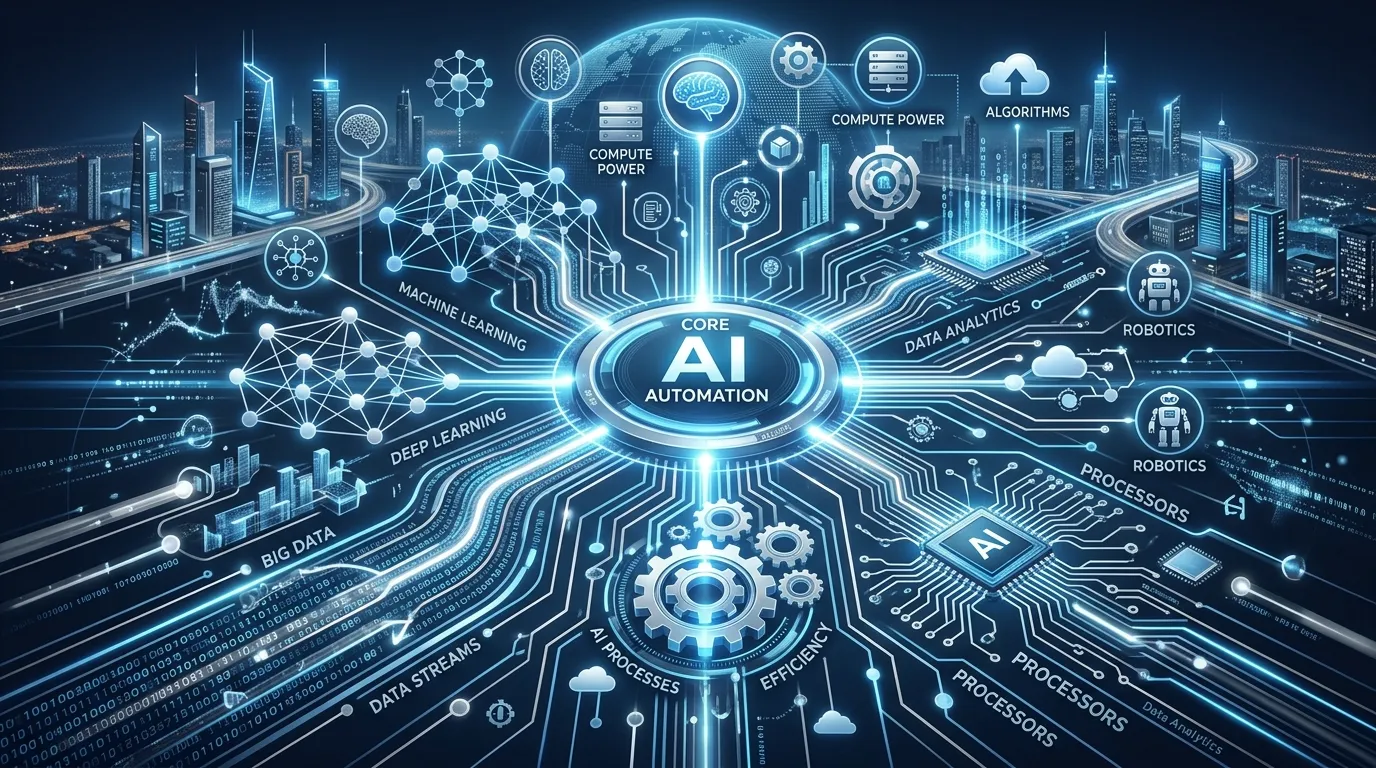
To understand the impact of this technological shift, you need to look at the building blocks. Automation using AI is not a single tool. It is a collection of advanced technologies working together to simulate human intelligence and execute complex tasks seamlessly. As business process automation continues to evolve, workplaces can automate tasks with AI far beyond the capabilities of previous generations of technology.
Key Technologies Enabling Automation Using AI
Several core technologies drive the modern automation landscape. When combined, they create highly intelligent systems capable of transforming your daily workflow.
- Machine Learning (ML): This forms the backbone of most intelligent systems. Machine learning algorithms allow computers to learn from massive datasets. Instead of being explicitly programmed to perform a task, the system identifies patterns and improves its performance over time. As datasets grow, ML models can predict outcomes, detect anomalies, and even suggest actionable next steps for business users.
- Natural Language Processing (NLP): NLP gives machines the ability to understand, interpret, and generate human language. This technology powers voice assistants, translation software, and automated customer support systems. NLP is a core driver in AI workflow automation as it enables software bots and virtual assistants to read and compose emails, generate reports, and converse with customers in natural language.
- Robotic Process Automation (RPA): Traditional RPA uses software robots to execute highly repetitive, rule-based digital tasks, like data entry. When combined with cognitive tech, RPA becomes intelligent automation, allowing bots to handle exceptions and process unstructured data. With AI, RPA is no longer limited to simple logic; it can respond to changing inputs and learn new workflows.
- Computer Vision: This technology enables software to derive meaningful information from digital images, videos, and other visual inputs. It is crucial for applications ranging from autonomous vehicles to quality control in manufacturing facilities. Computer vision paired with AI automation tools can inspect products, detect anomalies, and even interpret handwritten notes or signatures across a range of industries.
Expanding the Technology Landscape
In addition to these major pillars, other supporting technologies work alongside AI to further enhance automation. Deep learning, a subset of machine learning, allows systems to perform advanced pattern recognition. Speech recognition technology converts spoken language into actionable digital data, empowering virtual agents and automated call centers. Cloud computing enables AI infrastructure to scale rapidly, while edge computing allows devices to process and act on data locally for ultra-low latency.
How Automation Using AI Differs from Traditional Methods

Traditional software is incredibly rigid. If a standard bot encounters a scenario outside its programmed rules, it stops working and requires human intervention. Automation using AI, on the other hand, is highly adaptable.
Because intelligent systems possess learning capabilities, they adjust to new inputs and changing environments. They excel at handling unstructured data, such as emails, social media posts, and images, which traditional systems simply cannot process. Most importantly, automation using AI executes complex decision-making processes, weighing multiple variables to choose the best course of action without human prompting.
Comparing Automation Approaches
|
Feature |
Traditional Automation |
Automation Using AI |
|---|---|---|
|
Data Processing |
Structured data only |
Structured and unstructured data |
|
Adaptability |
Rigid rules |
Learns and adapts over time |
|
Intervention |
Requires human help for exceptions |
Handles exceptions independently |
|
Primary Use |
Repetitive manual tasks |
Complex cognitive decision-making |
Real-World Difference Example
For example, consider invoice processing. Traditional automation scans for fixed fields and inputs the data. If the format changes or an unexpected value appears, the system fails. AI automation, by contrast, can read and interpret varied invoice layouts, recognize critical details like purchase order numbers regardless of their position, and even flag suspicious activity—automatically adapting as it encounters new patterns.
Applications of Automation Using AI Across Industries
The versatility of intelligent systems means their applications are incredibly diverse. Organizations across the globe are finding unique ways to leverage these tools to gain a massive competitive edge. Let’s explore how AI automation transforms specific sectors and why organizations should continuously seek new ways to automate tasks with AI.
Manufacturing and Supply Chain Logistics
The manufacturing sector has long been a pioneer in deploying robotics. Today, smart factories utilize automation using AI to monitor equipment health and predict failures before they happen. This predictive maintenance minimizes costly downtime and extends the lifespan of expensive machinery.
AI automation tools also optimize production schedules, forecast demand more accurately, and streamline the procurement process by analyzing fluctuating costs and supplier reliability. In logistics, automation using AI manages supply chains by predicting demand spikes, optimizing delivery routes in real-time, and managing warehouse inventory with pinpoint accuracy. This ensures products reach consumers faster while reducing overhead costs.
A great example is the use of AI-powered robotic arms that adapt their movements on the assembly line depending on the size and shape of products, helping to reduce errors and waste.
Customer Service and Communication
Customer expectations are higher than ever. People want instant answers and highly personalized support. Chatbots and virtual assistants handle thousands of routine inquiries simultaneously, providing immediate relief to human agents. Businesses leverage AI automation to provide 24/7 support through a variety of channels—websites, text, messaging apps, and voice assistants.
Furthermore, automation using AI analyzes past customer interactions to deliver highly personalized customer experiences. It tailors responses and product recommendations to individual preferences, increasing conversion rates and customer satisfaction. For organizations seeking to enhance collaboration and reduce meeting fatigue, explore this guide on how to automate tasks and streamline your entire workflow.
Crucially, AI-based call analytics can identify customer sentiment and trends, empowering management to train staff more effectively or respond to emerging issues before they become critical.
Healthcare Innovations
The integration of smart technology in medicine is saving lives daily. Diagnostic assistance tools use computer vision to analyze medical images, often spotting anomalies like tumors earlier and more accurately than human eyes.
Electronic Health Records (EHRs) can be updated by voice, and AI-driven tools sift through patient data to flag medication errors or contraindications. In research, automation using AI accelerates drug discovery by simulating how different chemical compounds interact, finding promising candidates far faster than traditional lab testing. On the administrative side, automated patient management systems handle scheduling, billing, and record-keeping, allowing healthcare professionals to focus entirely on patient care.
Telemedicine platforms rely on AI workflow automation for triage, directing urgent cases to specialists and ensuring efficient allocation of resources—even predicting no-shows to increase clinic effectiveness.
Financial Services
Banks and financial institutions process massive volumes of data every second. Automation using AI is heavily utilized for fraud detection and comprehensive risk assessment. Machine learning models instantly flag unusual spending patterns that indicate credit card fraud, often stopping criminal activity before customers are affected.
Automated document processing dramatically reduces the paperwork burden for mortgage applications, loan approvals, and compliance checks. Additionally, automated trading algorithms execute trades at lightning speed based on market fluctuations. Meanwhile, intelligent financial advisors provide personalized investment strategies to everyday consumers based on their unique risk profiles.
Marketing and Sales
AI automation tools are revolutionizing the way marketing and sales teams operate. From analyzing millions of customer interactions to predicting purchasing behavior and personalizing content across channels, automation using AI delivers relevant messages at precisely the right moment. Automated email campaigns, customer segmentation, social media scheduling, and sentiment analysis all benefit from AI workflow automation.
Advanced business process automation solutions can automatically assign hot leads to sales representatives, generate custom proposals in seconds, and track campaign ROI with unmatched accuracy.
Core Benefits of Implementing Automation Using AI
The widespread adoption of these technologies is driven by a clear set of tangible benefits. Companies investing in automation using AI see highly measurable returns on their investment. Let’s take a deeper look at these transformational changes.
Increased Efficiency and Productivity
Humans get tired, distracted, and prone to making mistakes during repetitive tasks. Intelligent systems do not. Automation using AI drastically reduces manual errors and ensures high-quality output around the clock. By handling these repetitive duties, automation using AI facilitates much faster processing times, allowing businesses to scale their operations without necessarily expanding their workforce at the same massive rate.
One survey found that companies who adopted AI workflow automation experienced up to a 40% decrease in process time and a 30% reduction in costs related to repetitive tasks. This efficiency means businesses can respond to change with agility—launching products faster and capturing market share ahead of competitors.
Substantial Cost Savings
Efficiency directly translates to profound financial savings. Optimization of labor and resources means companies can produce more with less effort. Deploying automation using AI for routine administrative tasks reduces operational overheads and lowers the core cost of doing business. Over time, the initial investment in this infrastructure pays off through sustained, compounding operational savings.
Organizations using AI automation tools often report savings on physical resources as well, such as paper and ink, thanks to automated digital workflows. AI-powered supply chains reduce waste by accurately forecasting demand and optimizing inventory, leading to less capital tied up in unsold goods and lower storage costs.
Enhanced Accuracy and Quality Control
Consistency is a major advantage of smart systems. An automated quality control camera on a manufacturing line inspects the thousandth product with the exact same rigor as the first. This consistent performance ensures high product quality. Furthermore, automation using AI enables data-driven decision-making, removing human guesswork and cognitive bias from critical business strategies.
In the service sector, AI workflow automation ensures that information is logged, stored, and retrieved accurately across different departments—minimizing human error that can lead to compliance fines, missed deadlines, or miscommunication with customers.
Additional Advantages
- Scalability: Once set up, AI automation tools can scale to manage larger volumes of business without requiring identical increases in staffing or infrastructure.
- Real-Time Intelligence: AI provides up-to-the-minute insights, alerting leaders to opportunities and threats in near real time so they can act decisively.
- Employee Satisfaction: By automating repetitive, mind-numbing chores, workers can focus on creative, strategic, or relationship-oriented tasks that add value and improve their job satisfaction.
Navigating Challenges in Automation Using AI
Despite the incredible advantages, the transition to an automated world is not without friction. Organizations must navigate several complex hurdles to implement automation using AI successfully and responsibly.
Ethical Implications and Workforce Shifts
The most pressing concern for many people is job displacement. As systems become more capable, certain roles inevitably become obsolete. Society must grapple with the future of work and how to actively support displaced workers. Additionally, bias in algorithms remains a significant issue. If you train a system on historical data containing human prejudices, the automation using AI will replicate and even amplify those biases in its decisions.
The importance of ethical AI cannot be overstated. Companies must design transparent algorithms, provide explanations for automated decisions, and involve diverse teams in model development and auditing.
Data Privacy and Security Risks
Intelligent models thrive on massive amounts of data. The more information an algorithm processes, the smarter it gets. However, this raises massive concerns regarding protecting sensitive information. Companies must ensure they safeguard customer data against relentless cyber threats. They also face the heavy burden of regulatory compliance, navigating strict frameworks to avoid hefty fines and reputational damage.
As cybercriminals become more sophisticated, security teams use automation using AI to proactively detect threats, respond to incidents, and even patch vulnerabilities before exploits occur.
Implementation Complexities
Deploying automation using AI is rarely a simple plug-and-play process. Integration with existing legacy systems proves highly complicated and expensive. Furthermore, building and maintaining these systems requires a highly skilled workforce. There is currently a global shortage of data scientists, machine learning engineers, and specialists, making it difficult for some companies to execute their strategies.
Success requires detailed planning, realistic timelines, ongoing training, and strong change management programs to address both technical obstacles and cultural resistance.
The Future of Automation Using AI
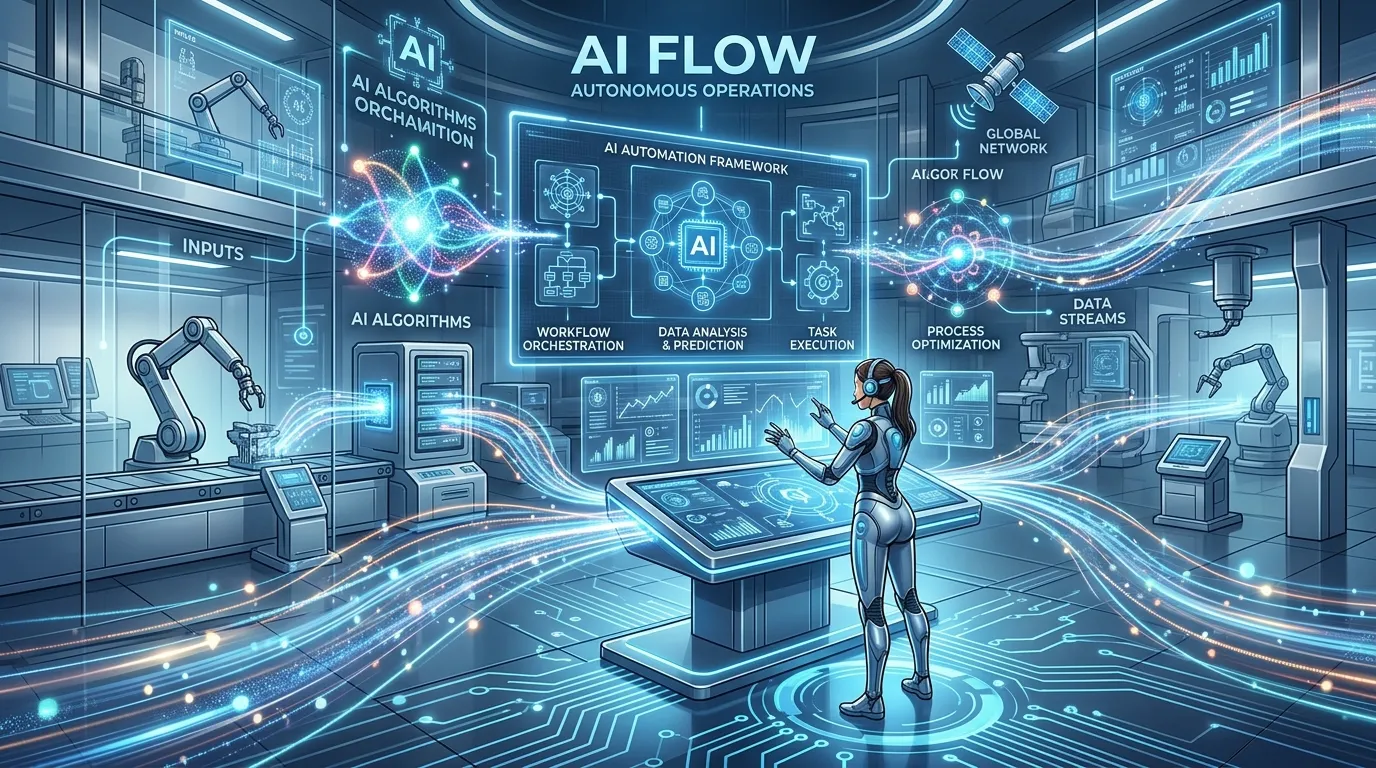
We are only at the beginning of this technological revolution. The technology advances at a rapid pace, and the coming years will bring even more profound changes to the global workplace. Forward-thinking companies are investing today to be leaders tomorrow.
Emerging Trends to Watch
One major trend is hyperautomation, which involves identifying, vetting, and automating as many business and IT processes as possible using a combination of tools. We also see a rise in edge computing, where data processing happens closer to the source rather than in a centralized cloud, heavily reducing latency. Finally, there is a strong push toward Explainable AI, which aims to make the decision-making processes of complex models transparent and understandable to human operators.
- AI-Driven Personalization: Automation using AI allows companies to tailor services and products at scale for individual tastes.
- Self-Healing Systems: Next-generation automation tools not only detect problems but can also fix many issues automatically—reducing downtime.
- Cross-Industry Collaboration: Expect more open-source solutions and partnerships as businesses realize the value of sharing best practices for business process automation.
The Synergy Between Humans and Machines
The future of work is not humans versus machines; it is humans working alongside machines. Collaborative intelligence will become the global norm. Automation using AI handles data crunching, pattern recognition, and repetitive tasks, thereby augmenting human capabilities. Humans bring empathy, creativity, ethical judgment, and complex problem-solving skills to the table.
Organizations that thrive will be those that invest in upskilling and reskilling workers, providing everyone with the tools to use and manage advanced AI technologies.
To thrive in this new landscape, individuals and organizations must prioritize lifelong learning and aggressive reskilling. Workers need to continuously update their skills to remain relevant. At the same time, governments and industry leaders must collaborate on ethical guidelines and policy-making to ensure the benefits of automation using AI are distributed fairly.
Frequently Asked Questions
What exactly is automation using AI?
Automation using AI refers to the integration of artificial intelligence technologies with traditional automation software to perform complex tasks. It allows systems to learn, adapt, and make decisions without requiring constant human intervention.
How does machine learning improve automation?
Machine learning allows automated systems to analyze data patterns and improve their accuracy over time. Instead of relying on static rules, the software learns from past actions to handle future tasks more efficiently.
Will automation using AI replace human jobs completely?
While some repetitive roles will disappear, automation using AI generally shifts the nature of work rather than eliminating it entirely. Humans will transition into roles requiring creativity, emotional intelligence, and strategic oversight.
How can small businesses afford automation using AI?
Many software providers now offer scalable, cloud-based tools that operate on an affordable subscription model. Small businesses can start by automating simple tasks like email marketing before investing in larger infrastructure.
What is the biggest risk of implementing intelligent automation?
Data security and privacy represent the most significant risks when deploying these systems. Companies must protect the massive amounts of data required to train these models from cyberattacks and ensure compliance with privacy laws.
Can automation using AI help remote workers?
Yes, it streamlines digital workflows, automatically transcribes virtual meetings, and manages project deadlines. Remote workers can also improve their home office environment by discovering the best internet radio stations to boost their daily focus.
How does natural language processing aid customer service?
Natural language processing enables chatbots to understand the context and intent behind customer inquiries. This allows businesses to provide accurate, automated responses to complex questions twenty-four hours a day.
What is hyperautomation?
Hyperautomation is a business strategy focused on automating as many processes as technically possible. It combines robotic process automation with advanced machine learning to create entirely self-sufficient operational workflows.
Do automated systems have biases?
Yes, if an algorithm trains on biased historical data, it will produce biased results. Organizations must actively audit their data sets and decision-making models to ensure fairness and prevent discriminatory outcomes.
How can I prepare my career for automation using AI?
Focus on developing uniquely human skills such as critical thinking, creative problem solving, and complex communication. Staying updated on industry technology trends ensures you can work comfortably alongside automated tools.