
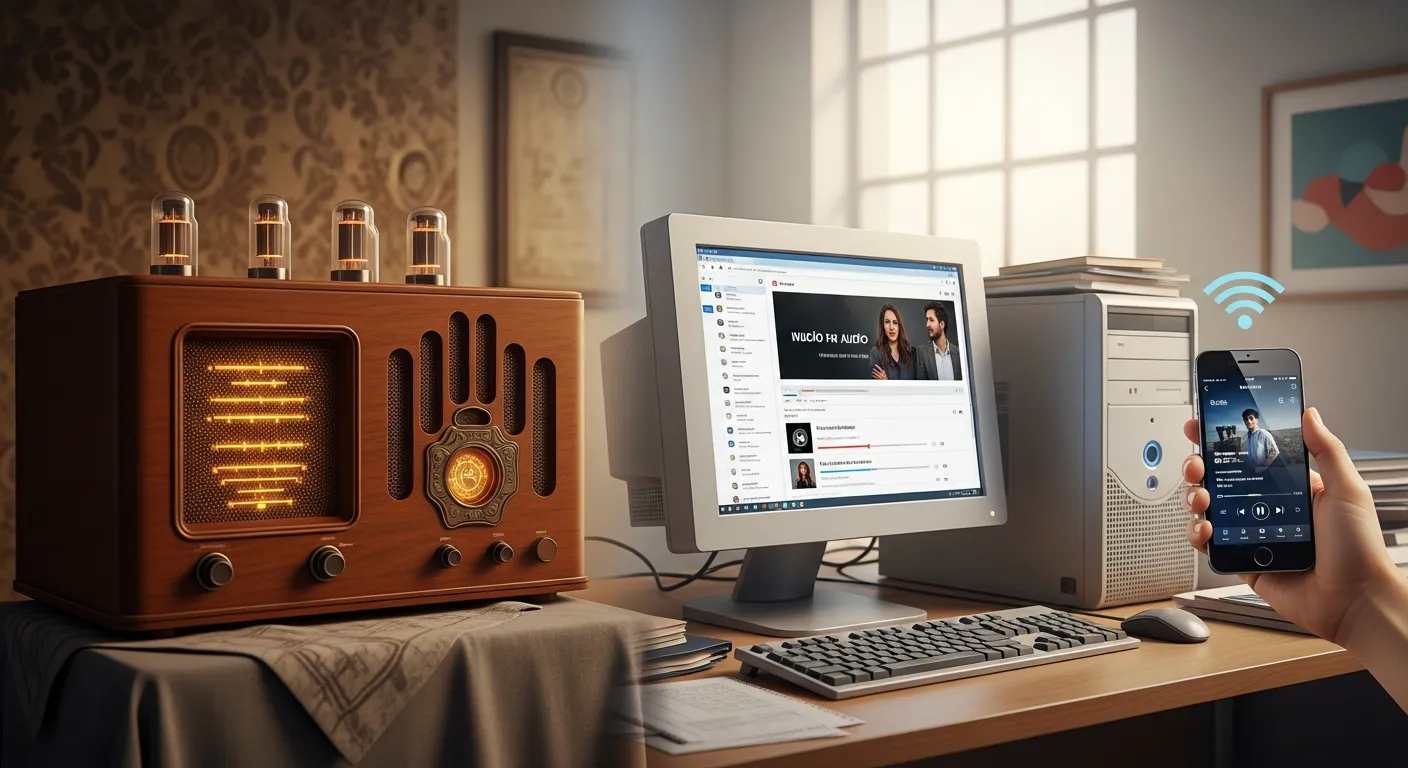
Radio web wifi combines traditional broadcasting, internet streaming, and wireless connectivity to create global, on-demand audio access. It removes geographical limits, enhances personalization, and enables seamless listening across devices, transforming modern audio consumption entirely.
The crackle of static and the sudden burst of a familiar voice once defined our auditory experiences. Over the past century, the way we consume sound has undergone a massive transformation. We moved from the restricted reach of local airwaves to the limitless boundaries of global algorithms. This shift changed the devices we use and fundamentally altered our relationship with information, entertainment, and each other.
At the heart of this transformation lies the convergence of three monumental technologies: radio web wifi. Together, they redefined our auditory experiences. They dismantled the geographical limitations of traditional broadcasts, creating unprecedented accessibility and forging entirely new forms of content consumption. You no longer wait for a specific hour to hear your favorite program. You are no longer confined to the stations within your city limits.
In this comprehensive guide, we explore the historical journey of audio technology, tracing its roots from early analog broadcasts to modern marvels. We examine how internet radio streaming online broke down borders, how wireless networks untethered our devices, and what the current landscape looks like when these technologies intertwine. Finally, we look ahead to the future implications of this convergence, revealing how our auditory world will continue to evolve.
The Golden Age of Broadcasting: A Foundation

Long before the internet connected the globe, traditional broadcasts served as the primary invisible thread binding society together. The story begins in the late 19th and early 20th centuries, heavily driven by pioneers like Guglielmo Marconi. His development of wireless telegraphy laid the groundwork for transmitting sound over long distances without physical cables.
Society and Shared Experiences
The societal impact was immediate and profound. Families gathered in their living rooms around large, wooden console units to listen to evening news broadcasts, gripping serial dramas, and live musical performances. It created a shared cultural experience. When a major historical event occurred, the public learned about it simultaneously through the airwaves. This medium provided news, entertainment, and a deep sense of community impossible to achieve before on a national scale.
Broadcasting also drove technological and political progress, often being at the heart of wartime communication and social engagement. In times of crisis, radio delivered critical updates directly to millions. For decades, it was the most trusted source for information and the foundation for shared narratives across borders.
The Limitations of Analog
However, early technology had significant limitations. Terrestrial broadcasts relied on AM and FM frequencies that could only travel so far before degrading into static. A listener in New York could not tune into a local station in London. Furthermore, the analog quality of these transmissions was highly susceptible to weather interference and physical obstructions like mountains or tall buildings. The concept of a web based radio player remained decades away.
Analog broadcasters faced both technical hurdles and regulatory restrictions. Governments often controlled which frequencies were available, and there was finite “space” on the airwaves. Overcrowded bands and signal interference posed real challenges, especially in large cities. These limitations hinted at a future need for greater accessibility through emerging digital tools.
The Web Revolution: Opening New Channels
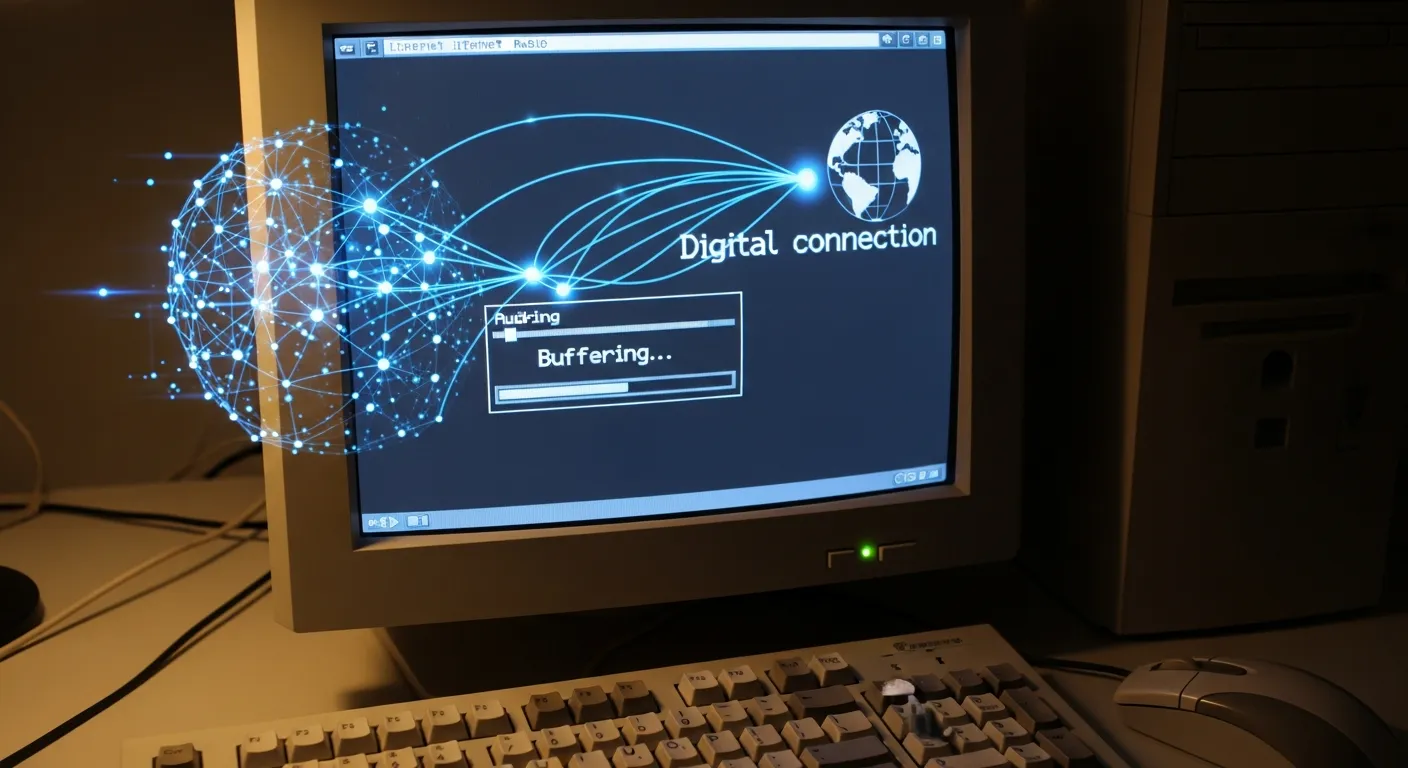
The invention and widespread adoption of the World Wide Web in the 1990s changed the trajectory of human communication. Suddenly, vast amounts of information were available at our fingertips. Innovators quickly realized this new digital infrastructure could transmit sound just as effectively as text and images. This realization sparked the early days of radio web wifi integration.
Early Audio Streaming
Early audio streaming was a clunky but revolutionary process. Technologies emerged in the mid-1990s, allowing internet users to listen to compressed audio streams over dial-up connections. These were the very first forms of internet radio streaming online. The sound quality was often poor, plagued by buffering and low bitrates, but the concept was groundbreaking. A listener could access a broadcast from across the world with a few clicks.
A defining feature of this period was experimentation. Pioneering internet radio stations like Radio Paradise and SomaFM opened new doors by offering unique, non-commercial playlists. These ventures inspired others to test the limits of web based radio players and the potential of digital-only stations.
The Rise of On-Demand Content
As internet speeds increased with broadband, podcasting emerged in the early 2000s. By attaching audio files to RSS feeds, creators allowed users to download shows and listen to them on portable digital players. This shifted the paradigm from scheduled, linear broadcasting to on-demand audio. It empowered niche content creators to reach dedicated audiences without needing a traditional transmitter. If you want to dive deeper into the technical setup of these early streams, you can explore the mechanics of radio streaming to see how digital broadcasting operates.
Podcasting also encouraged cross-border collaborations, allowing creators in different countries to produce, publish, and share jointly-developed shows. This form of internet radio streaming online helped democratize access to the airwaves, challenging the dominance of traditional broadcasters.
Wi-Fi: Untethering the Audio Experience
While the web provided the infrastructure for global audio distribution, early internet users remained tethered to desktop computers by Ethernet cables. The rise of wireless networking changed the equation entirely. By allowing devices to connect to the internet wirelessly, consumers gained the freedom to move around while staying connected.
Multi-Room Audio Systems
This wireless revolution had a massive impact on home audio. Companies capitalized on radio web wifi connectivity to create multi-room speaker systems.
- Listeners can stream internet radio streaming online in the kitchen.
- Users can play downloaded podcasts in the living room.
- Everything is controlled seamlessly from a computer or mobile device.
- High-fidelity audio no longer requires miles of speaker wire hidden beneath floorboards.
As Wi-Fi adoption surged, leading audio brands rolled out wireless-enabled soundbars, subwoofers, and portable speakers. This let listeners synchronize playback across entire homes, and Wi-Fi streaming opened new doors for party playlists, home theaters, and shared experiences.
Smartphones and Ubiquitous Access
The introduction of smartphones further accelerated this trend. Equipped with wireless receivers and cellular data connections, smartphones became portable media powerhouses. Users hop onto hotspots in cafes, airports, and public squares, enjoying seamless streaming wherever they go. This enabled ubiquitous access to wifi radio stations live and podcasts, ensuring favorite audio content remains just a tap away.
With apps capable of streaming nearly any online FM radio via internet or podcast, smartphones became the centerpiece for digital audio interaction. Notification settings, custom alarms, and app integrations allowed users to deeply personalize the audio experiences central to their daily routines.
The Convergence: Radio Web Wifi Intertwined
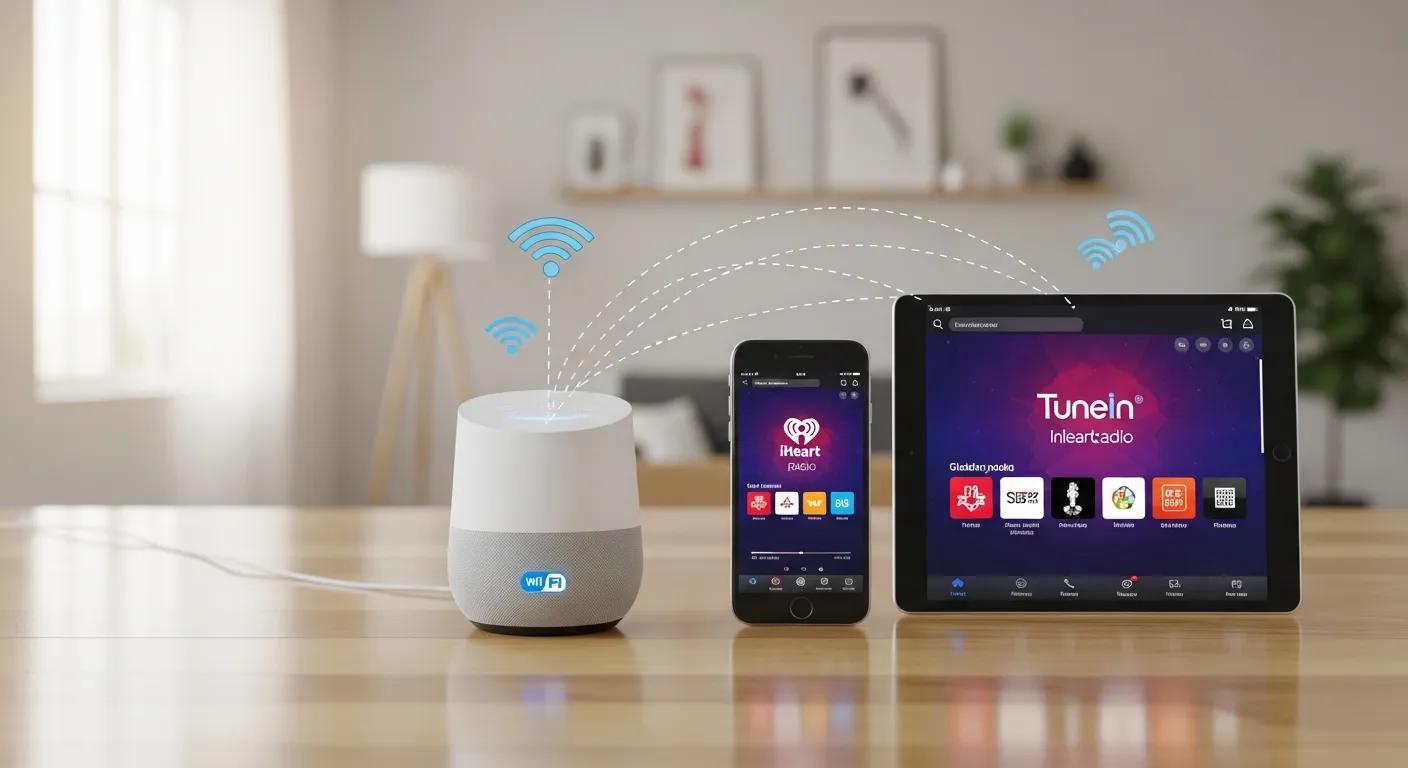
Today, the lines between terrestrial signals, the web, and wireless networks have blurred into a single, cohesive ecosystem. Internet platforms aggregate tens of thousands of global stations, making them available to anyone with a smartphone. You can listen to online FM radio via internet from Chicago while sitting in a park in Tokyo.
Leading platforms like TuneIn, iHeartRadio, and Radio Garden created intuitive interfaces that bridge legacy radio designs—complete with “tuning dials”—with the endless choice provided by the web. This fusion means users can explore wifi radio stations live from the other side of the world, discover foreign music genres, and catch breaking news in real time.
Interactive Smart Speakers
Smart speakers serve as the physical manifestation of this convergence. By combining radio web wifi connectivity, web-based audio libraries, and advanced voice recognition, these devices provide voice-activated access to diverse content.
|
Feature |
Traditional Broadcast |
Web-Based Smart Speaker |
|---|---|---|
|
Accessibility |
Limited to local range |
Global reach via internet |
|
Control |
Manual tuning |
Voice-activated requests |
|
Content Choice |
Restricted by time slots |
Completely on-demand |
|
Hardware Needed |
Antenna receiver |
Web based radio player |
You simply ask for a specific song, podcast, or station, and the device pulls the data from the web and plays it instantly. This redefines the experience as personalized, interactive, and entirely on-demand.
The global spread of internet radio streaming online offers a sense of limitless variety absent from early broadcasts. Families can pause live radio, replay favorite shows, or “cast” a podcast from smartphone to smart TV. Entire homes, offices, and public spaces are now orchestrated through these smart audio environments.
New Forms of Audio Content and Consumption
With foundational technologies in place, creators and platforms innovate entirely new formats for audio consumption. The most prominent example is the explosion of podcasts. From niche topics and deep-dive investigative journalism to narrative storytelling and celebrity-hosted interviews, podcasts fundamentally changed how we consume audio.
Audiobooks and Live Audio
Audiobooks represent another rapidly growing sector. In the past, people had to rent or purchase physical CDs or cassettes. Today, with digital distribution platforms, the entire process takes mere seconds. The convenience of storing hundreds of books on a single device and streaming them instantly expands the market for literature in incredible ways.
Live audio apps also signal the return of spontaneous audio. These platforms utilize internet radio streaming online to host large, virtual rooms where users listen to conversations, ask questions, and interact with speakers in real-time. This model echoes the interactive nature of early call-in shows, reimagined for the digital age through radio web wifi networks.
Short-form audio, social listening rooms (such as Spotify’s Greenroom or Twitter Spaces), and custom “radio channel” playlists are just a handful of the creative directions made possible by this convergence. Many radio stations have started simulcasting both on-air and through their web based radio player platforms, turning every broadcast into a potential on-demand podcast episode or global share.
Advantages Over Traditional Audio
Some of the biggest advantages of this new consumption landscape include:
- Time-Shifting: Listeners are no longer bound to schedules. Missed a live segment? Instantly rewind or replay through an online FM radio via internet app.
- Personalization: Powerful algorithms curate playlists and suggest new shows according to listener preferences and behaviors.
- Universal Access: Radio web wifi connects listeners in remote rural areas, city centers, and across international borders without signal degradation.
Challenges in the Integrated Audio Landscape
As the digital audio ecosystem continues to mature, significant challenges remain. Monetization is a primary concern for creators. While some podcasts rely on lucrative advertising deals and sponsorships, many smaller, independent creators struggle to generate sustainable revenue. Balancing advertising, subscriptions, and creator compensation remains a delicate tightrope.
Platforms continually experiment with new business models: ad-supported streaming, paid subscriptions, “tip jars,” merchandise sales, and exclusive content behind paywalls. The future likely holds platform innovations to support fair compensation for both micro-creators and major broadcasters in this web based radio player ecosystem.
Discoverability and Privacy
Discoverability is another major hurdle in an oversaturated market. With millions of podcasts and wifi radio stations live available, cutting through the noise to reach new audiences requires strategic marketing and algorithm manipulation. The challenge often lies in making a show stand out on major digital platforms.
Data privacy and the ethics of personalization also demand consideration. These algorithms require vast amounts of user data—what you listen to, when you listen, and how long you stay engaged. As companies harvest this information to serve targeted ads and curated playlists, protecting consumer privacy becomes increasingly critical.
Additional issues include navigating copyright for international streaming, ensuring accessibility for listeners with disabilities, and maintaining equitable access in places where high-speed wifi is not yet universal.
Expanding the Table: The Diverse World of Radio Web Wifi
Let’s explore some of the core differences and overlaps between key elements in today’s radio web wifi ecosystem:
|
Audio Type |
Access Method |
Customization |
Primary Devices |
Sample Use Case |
|---|---|---|---|---|
|
AM/FM Broadcast |
Local antenna/Frequency |
Low |
Radios, car stereos |
Morning commute, local news |
|
Satellite Radio |
Subscription + Receiver |
Moderate |
Car receivers, specialized radios |
Long-distance driving, music specialties |
|
Internet Radio Streaming Online |
Website/App/Wifi |
High |
Smartphones, computers, smart TVs |
Global music discovery, travel, expats |
|
Podcasts & On-Demand |
App/Download |
Very high |
Phones, tablets, smart speakers |
Education, entertainment, niche passions |
|
Wifi Radio Stations Live |
Web/App/Wifi |
High |
Home offices, smart home devices |
Background music, event soundscapes |
|
Web Based Radio Player |
Browser/Mobile App |
Very high |
Laptops, smart TVs, mobile devices |
Cross-platform listening, multi-tasking |
The Future of Audio: Beyond the Horizon
The convergence of radio web wifi has brought us far, but the horizon promises even more innovation. Artificial intelligence and machine learning play a crucial role in creating hyper-personalized audio experiences. Imagine an algorithm generating a custom daily news podcast specifically tailored to your interests, delivered in a synthesized voice of your choosing.
Spatial audio and immersive listening technologies are also poised to transform how we consume sound. By utilizing advanced software and hardware, spatial audio creates a three-dimensional soundscape that mimics the way humans hear in the real world. This makes podcasts, music, and online FM radio via internet feel significantly more lifelike and engaging.
Integration with other smart technologies appears set to deepen. As homes, cars, wearable devices, and even appliances become web-enabled, the transition from one audio environment to another will be seamless — your morning news briefing can continue from your kitchen speaker into your car without interruption. Personalized content, context-aware recommendations, and touch-free control will dominate.
As more homes and vehicles become connected, our audio experiences will follow us seamlessly from room to room and house to car. The evolving role of traditional broadcasts in this digital age will likely focus on hyper-local content and live, community-driven events that cannot be easily replicated by an algorithm.
Conclusion: Radio Web Wifi and the New Audio Reality
From the invention of radio waves to the rise of streaming algorithms, the audio world is in constant motion. The advent of radio web wifi is not just a technical evolution—it’s a cultural one. We have left behind geographic and technological borders, redefining what it means to connect, to discover, and to share through sound. Whether you favor classic broadcasts, on-demand podcasts, or algorithmically curated playlists, the audio content world has never been more accessible, personalized, or diverse.
As platforms continue to grow and digital divides close, expect the landscape to become even richer. The next era will bring smarter content discovery, immersive listening, greater interactivity, and new opportunities for creators and audiences alike. The future of sound is truly borderless and always within reach.
Frequently Asked Questions
What exactly does radio web wifi mean?
The term refers to the convergence of traditional broadcasting concepts, internet distribution, and wireless connectivity. Together, radio web wifi allows users to listen to global audio content seamlessly on digital devices. It eliminates the geographical barriers of the past.
How does internet radio streaming online work?
Internet radio streaming online transmits audio data continuously over the web rather than through traditional airwaves. It compresses audio files and sends them in small data packets to your device. You can explore this deeply by checking out the best internet radio stations available today.
Can I listen to local stations outside my city?
Yes, using a web based radio player, you can access local stations from anywhere in the world. As long as the station provides a digital stream, geographical limits no longer apply. This allows you to stay connected to your hometown news easily.
What are wifi radio stations live?
These are digital streams of live broadcasts accessed via a wireless internet connection. By tuning into wifi radio stations live, you get real-time audio without needing an AM/FM antenna. Discover top options by reading about the best internet radio stations for digital listeners.
Do I need special equipment for online FM radio via internet?
No special equipment is required other than a web-connected device like a smartphone, tablet, or computer. You simply open an app or a browser to access online FM radio via internet. Smart speakers also make this process incredibly simple through voice commands.
Are web based radio players free to use?
Many web based radio players are completely free, supported by advertisements or community donations. Some platforms offer premium, ad-free tiers for a monthly subscription fee. The choice depends entirely on your listening preferences.
Why is internet radio streaming online better than traditional FM?
Internet radio streaming online offers infinite choices, global reach, and often superior digital sound quality. It rarely suffers from the static and signal loss common with terrestrial FM broadcasts. To find great channels, you can review the best internet radio stations curated for modern listeners.
Can I broadcast my own wifi radio stations live?
Yes, anyone with a computer, a microphone, and broadcasting software can start their own digital station. The barrier to entry for wifi radio stations live is remarkably low compared to buying a physical transmission tower. It empowers independent creators greatly.
How do smart speakers use radio web wifi?
Smart speakers connect to your home wireless network to access global directories of audio content. When you ask for a station, it uses radio web wifi technology to locate the digital stream and play it instantly. This replaces the need for a traditional receiver.
Does online FM radio via internet consume a lot of data?
Audio streaming generally consumes much less data than video streaming. However, if you listen to online FM radio via internet for many hours a day on a cellular network, it can add up. Connecting to a wireless network prevents excess mobile data charges.