


Focus music radio helps improve concentration, productivity, and study performance by providing continuous, distraction-free audio. This guide explores the science behind focus music, compares popular styles, and shares practical tips for building an effective listening routine.
Picture this: you sit down to tackle a big project, your mind buzzing with distractions. The phone keeps lighting up. Your roommate is talking in the next room. Then you press play on a focus music radio stream, slip on your headphones, and something shifts. The noise fades. Your thoughts settle. Suddenly, the work feels possible again.
That little shift is no accident. The right sound can change how your brain works, helping you slip into deep concentration and stay there longer. A good focus music radio station does exactly that, giving you a steady stream of carefully chosen tracks designed to keep your mind on task.
This guide walks you through everything you need to know about using focus music radio to study, work, and create. We’ll explore how it affects your brain, what types of sound work best, and how to build a listening routine that actually boosts your output. Here’s what we’ll cover:
- How music influences focus and attention
- The science behind concentration-friendly sound
- Different styles of focus music and who they suit
- How to choose and set up the right radio station
- A practical comparison to help you decide
Let’s dive in.
What Is Focus Music Radio and Why Does It Matter?
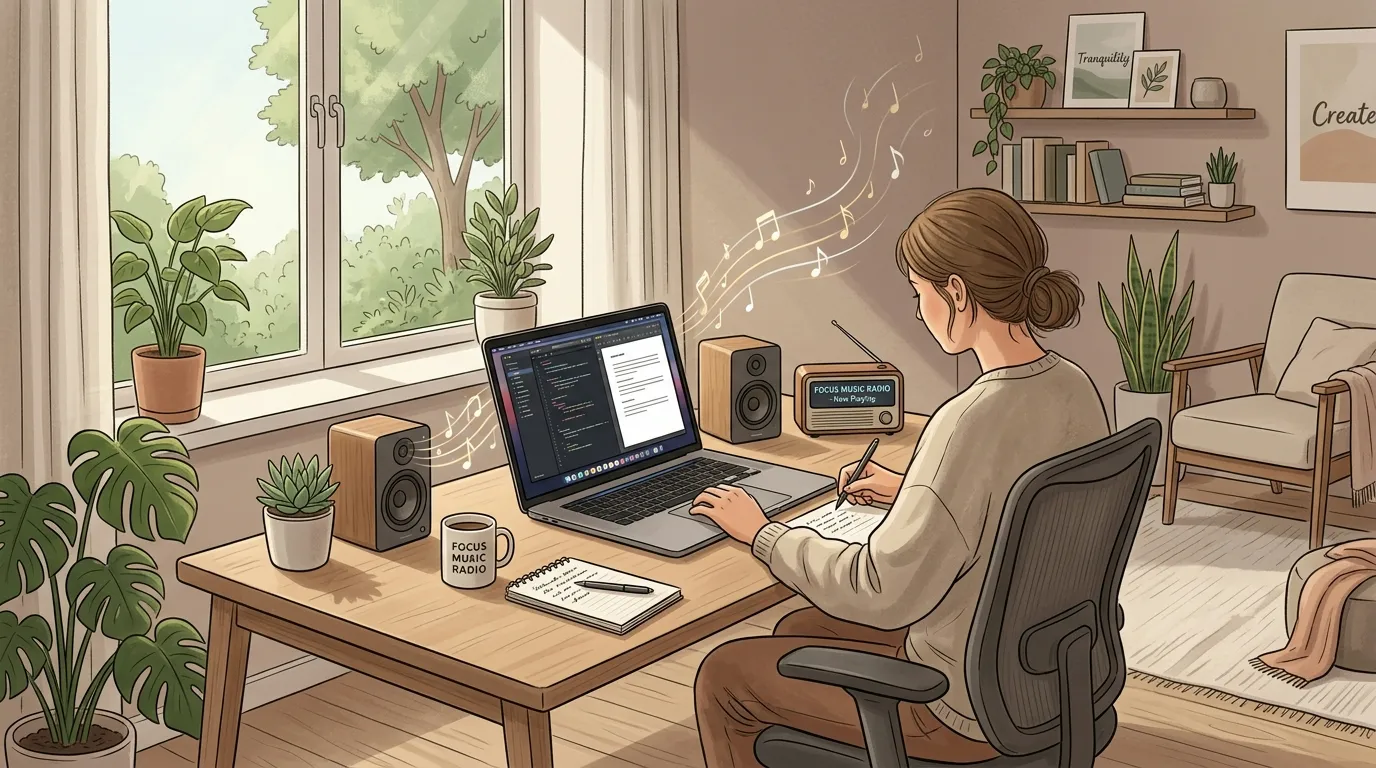
A focus music radio station is a continuous stream of instrumental or ambient tracks built specifically to support concentration. Unlike a regular playlist, it runs without interruption, removing the need to pick songs or manage gaps in the sound. You press play once and let it carry you through your work session.
The appeal lies in its simplicity. You don’t have to think about what comes next, which means fewer chances to break your flow. The music sits in the background, filling the silence and masking distracting noise without demanding your attention. That balance is the whole point.
Many people first discover focus music when they search for something to help them study or get through a long afternoon at the desk. They quickly notice the difference. Tasks feel less daunting. Time passes more smoothly. The constant stream becomes a signal to the brain that it’s time to concentrate.
How It Differs From a Regular Playlist
A typical playlist contains songs you love, often with lyrics, catchy hooks, and emotional pull. That’s wonderful for a road trip or a workout, but it can sabotage deep work. Words and strong melodies pull your attention away from the task in front of you.
Focus Music takes a different approach. It strips away the elements that distract and keeps only the ones that help. The result is sound that supports thinking rather than competing with it.
Here’s how the two compare:
- Regular playlist: lyrics, varied tempos, emotional peaks, frequent changes
- Focus music radio: instrumental, steady tempo, gentle texture, seamless flow
- Regular playlist: you manage tracks and skips
- Focus music radio: continuous, hands-free listening
- Regular playlist: designed for enjoyment
- Focus music radio: designed for productivity
Who Benefits Most From It
Almost anyone who needs sustained mental effort can gain from a focus music radio stream. Students cramming for exams, writers facing blank pages, programmers debugging code, and remote workers battling household noise all find value in it.
The common thread is the need to block out chaos and settle into a single task. Whether you’re studying for a test or finishing a report, the steady sound creates a reliable mental workspace you can return to again and again.
The Science Behind Focus Music and Concentration
You might wonder whether all of this is just placebo. The truth is more interesting. Research and lived experience both suggest that the right sound genuinely shapes how well we concentrate, though the effect depends heavily on the type of music and the person listening.
Your brain processes sound constantly, even when you’re not paying direct attention to it. Silence can feel uncomfortable, and sudden noises break concentration. A consistent stream of gentle sound fills that gap, giving your mind a stable backdrop that reduces the impact of random interruptions.
How Sound Affects Brain States
Our brains shift between different states throughout the day. Some states support focus and calm, while others bring distraction or stress. Certain types of Concentration Music appear to nudge the brain toward the states that help us work.
Slow, steady rhythms can encourage a relaxed yet alert frame of mind. This is the sweet spot for deep work, where you feel engaged but not anxious. Music without lyrics avoids tapping into the language centers of your brain, which you need free for reading, writing, and thinking.
The Role of Masking Distractions
One of the biggest benefits of focus music radio is simple noise masking. A consistent audio layer covers up the unpredictable sounds around you, such as conversations, traffic, or a humming appliance.
Predictable sound is far less distracting than unpredictable sound. When your brain knows what to expect, it stops monitoring the environment for surprises. That frees up mental resources for the task at hand. This is why a steady stream often works better than random silence punctuated by sudden noise.
Why Lyrics Can Hurt Focus
Here’s a key insight many people miss. Music with words competes for the same brain resources you use to process language. When you read or write while listening to lyrics, the two activities clash, and your performance can drop.
This is exactly why Productivity Music tends to be instrumental. By removing words, it sidesteps the conflict entirely. Your language centers stay free for your actual work, while the music supports your mood and blocks distractions in the background.
What the Research Suggests
Studies on music and cognition paint a nuanced picture. Some research shows that calm, instrumental music improves mood and endurance during repetitive tasks. Other findings suggest that complex or fast music can hurt performance on demanding mental work.
The takeaway is that context matters. The best results come from matching the music to the task. For deep focus, simpler and steadier wins. For routine or repetitive work, slightly more energetic sound can help maintain motivation.
Exploring the Science of Music and Studying
If you want to understand the deeper connection between sound and learning, it helps to look at what educators and researchers have explored. The relationship between music and study habits has fascinated people for decades, and there’s a growing body of thoughtful writing on the topic.
One helpful resource explores whether music truly helps you study and focus, breaking down the evidence in a clear, approachable way. It’s a great starting point if you want to move beyond personal experience and into the reasoning behind it.
Can music help you study and focus .It’s a quick, worthwhile read. The piece weighs both the benefits and the limits.You’ll come away with a clearer sense of what works for you.
Reading sources like this helps you make smarter choices about your own listening habits. Instead of guessing, you can experiment with intention, knowing which factors tend to support focus and which ones tend to break it.
Types of Focus Music Radio Stations

Not all focus music sounds the same. Different styles suit different tasks, moods, and personal tastes. Understanding the main categories helps you pick the right stream for any given moment.
Ambient and Atmospheric
Ambient music drifts gently in the background with soft pads, slow swells, and minimal structure. It rarely has a strong beat, which makes it ideal for deep reading, writing, and reflection.
This style is perfect when you need calm and want the sound to almost disappear. Many people use ambient Focus Music for tasks that require careful thought and a quiet mind.
Best for:
- Reading dense material
- Creative writing
- Meditation-style focus
- Late-night study sessions
Lo-Fi Beats
Lo-fi has become hugely popular for studying and working. It blends gentle hip-hop rhythms with warm, slightly imperfect textures that feel cozy and relaxed. The steady beat gives a subtle sense of momentum without overwhelming you.
A lo-fi Study Music Radio stream strikes a nice balance between calm and energy. It’s especially popular with students who want something soothing yet motivating.
Best for:
- Long study sessions
- Routine tasks
- Email and admin work
- Casual creative projects
Classical and Instrumental
Classical music offers rich, intricate compositions that many people find inspiring. Piano pieces, string arrangements, and gentle orchestral works can create a refined, focused atmosphere.
Be mindful that some classical music is dramatic and loud, which can distract. For Concentration Music, choose calmer, slower pieces rather than intense symphonies.
Best for:
- Analytical work
- Writing and editing
- Problem-solving
- Building a calm mood
Nature Sounds and White Noise
Some focus stations blend music with nature sounds like rain, ocean waves, or forest ambience. Others offer pure white, pink, or brown noise. These options excel at masking distractions in noisy environments.
If you find melodies distracting, this category might suit you best. The texture provides cover without any musical structure to pull your attention.
Best for:
- Noisy offices or homes
- Sound-sensitive listeners
- Sleep-adjacent focus
- Pure distraction masking
Electronic and Downtempo
Downtempo electronic music provides steady, hypnotic rhythms with synthetic textures. It offers more energy than ambient while staying smooth and repetitive enough to support focus.
This style works well when you need to maintain a brisk pace through tasks without getting bored.
Best for:
- Repetitive work
- Coding and data entry
- Maintaining energy
- Afternoon slumps
Comparing Focus Music Styles at a Glance
Choosing among these styles gets easier when you see them side by side. The table below breaks down each type by energy level, best use, and key strength to help you match the music to your task.
|
Music Style |
Energy Level |
Best For |
Key Strength |
Watch Out For |
|---|---|---|---|---|
|
Ambient |
Very low |
Deep reading, writing |
Disappears into background |
May feel too sleepy |
|
Lo-Fi Beats |
Low to medium |
Studying, routine work |
Cozy and motivating |
Can get repetitive |
|
Classical |
Low to high |
Analytical tasks |
Rich and inspiring |
Dramatic pieces distract |
|
Nature/White Noise |
Low |
Noisy environments |
Strong distraction masking |
Lacks musical motivation |
|
Electronic/Downtempo |
Medium |
Repetitive work, coding |
Steady momentum |
Too busy for deep thought |
Use this as a quick reference. Identify the task you face, consider your energy level, and pick the style that fits. Over time, you’ll learn which streams help you most in different situations.
How to Choose the Right Focus Music Radio for You

The perfect station depends on you, your task, and your environment. What works for a friend may not work for you. Finding your ideal focus music radio takes a little experimentation, but a few guidelines speed up the process.
Match the Music to the Task
Start by considering what you’re about to do. Deep, demanding work calls for simpler, quieter sound. Routine or repetitive tasks can handle more energy and rhythm.
If you’re writing or reading, lean toward ambient or gentle instrumental streams. If you’re doing data entry or chores, lo-fi or downtempo Productivity Music keeps you moving without dragging your attention away.
Consider Your Personality
Some people thrive in near silence, while others need a steady beat to stay engaged. Pay attention to how you naturally respond to sound. If music tends to pull your focus, choose nature sounds or white noise instead.
There’s no universal right answer. Your brain is unique, so trust your own experience over any rule.
Test Different Streams
Spend a week trying various focus music radio stations. Note how each one affects your concentration, mood, and output. Keep the streams that help and drop the ones that don’t.
Pay attention to specifics:
- Does the tempo feel right?
- Do any sounds distract you?
- Does your energy stay steady?
- Do you lose track of time in a good way?
Mind the Volume
Volume matters more than people realize. Too loud, and the music itself becomes a distraction. Too quiet, and it fails to mask background noise. Aim for a level that fills the space without demanding attention.
A good rule is to set the volume just loud enough to cover ambient noise, then forget about it. If you find yourself noticing individual notes, turn it down slightly.
Avoid Constant Switching
Once you find a stream that works, stick with it during your session. Constantly changing stations breaks your flow and pulls you out of focus. The whole point of a Study Music Radio stream is hands-free consistency.
Setting Up Your Ideal Focus Listening Environment
The music is only one piece of the puzzle. Your surroundings and habits shape how well it works. A few thoughtful adjustments turn good focus music into a powerful productivity tool.
Choose the Right Equipment
Your listening gear affects the experience. Quality headphones, especially noise-cancelling ones, block external sound and let the music do its job. Open speakers work too, but they offer less isolation in noisy spaces.
You don’t need expensive equipment. Even modest headphones improve focus by creating a personal sound bubble that separates you from distractions.
Build a Pre-Work Ritual
Pairing your focus music with a simple ritual trains your brain to switch into work mode. Maybe you brew a cup of tea, clear your desk, and press play. Over time, this routine becomes a powerful cue.
The music becomes part of the signal. When you hear it, your mind knows it’s time to concentrate. This conditioning makes it easier to start, which is often the hardest part.
Reduce Other Distractions
Focus music masks noise, but it can’t fix everything. Silence your phone, close unnecessary tabs, and clear your workspace. The music works best alongside other good habits, not as a substitute for them.
Try these quick steps:
- Put your phone in another room or on silent
- Close email and messaging apps
- Tidy your immediate workspace
- Set a clear goal for the session
Use Timed Sessions
Pair your focus music radio with a time-management method like working in focused blocks followed by short breaks. The music carries you through each block, while the breaks keep you fresh.
This combination is powerful. The steady sound supports concentration during work, and the structured breaks prevent burnout. Together they create a sustainable rhythm for productive days.
Using Focus Music for Different Activities
Focus music isn’t just for studying. Its benefits stretch across many parts of life. Adapting your listening to each activity helps you get the most from it.
For Studying and Learning
Students gain a lot from a dedicated Study Music Radio stream. It creates a consistent study environment, masks dorm or library noise, and helps signal that it’s time to learn. Instrumental tracks keep the language centers free for reading and note-taking.
For best results, students should choose calmer streams during heavy reading and slightly more upbeat ones during review or practice problems. Matching the sound to the study task improves both focus and stamina.
For Working and Productivity
In a work setting, Productivity Music helps you push through long projects, repetitive tasks, and busy open offices. It blocks chatter, smooths over silence, and keeps you in a steady rhythm.
Knowledge workers, in particular, benefit from instrumental streams that support deep thinking. Whether you’re writing reports or analyzing data, the right sound keeps distractions at bay.
For Creative Work
Creative tasks have a unique relationship with sound. Some creators need silence, while others find that gentle music sparks ideas and keeps them in flow. Ambient and downtempo styles often work well here, providing atmosphere without intrusion.
Experiment to find what fuels your creativity. The goal is sound that supports your imagination rather than steering it.
For Reading and Relaxation
Even casual reading or winding down can benefit from soft focus music. Ambient streams create a calm bubble that helps you settle into a book or simply relax after a busy day.
In these moments, the music isn’t about productivity at all. It’s about creating a peaceful mental space where your mind can rest or wander freely.
Common Mistakes to Avoid With Focus Music Radio
Even a great tool can backfire when used carelessly. Watch out for these common pitfalls as you build your listening habit.
Choosing Music That’s Too Engaging
The biggest mistake is picking music that grabs your attention. Catchy melodies, sudden changes, and especially lyrics pull your mind away from your task. If you catch yourself humming along or listening closely, the music is too engaging.
Choose streams that fade into the background. The best Concentration Music is the kind you barely notice while you work.
Setting the Volume Too High
Loud music feels energizing at first but quickly becomes a distraction. It can also cause fatigue over long sessions. Keep the volume moderate, just enough to mask noise without overpowering your thoughts.
Your ears will thank you, and your focus will last longer. Gentle background sound beats blasting tunes every time.
Relying on It as a Cure-All
Focus music helps, but it can’t replace good habits. If your phone keeps buzzing or your workspace is a mess, no soundtrack will save your concentration. Treat the music as one part of a larger focus strategy.
Combine it with clear goals, a tidy space, and minimal distractions for the best results.
Switching Streams Too Often
Hopping between stations to find the perfect track defeats the purpose. Every switch is a small interruption that breaks your flow. Pick a stream, commit to it for the session, and let it do its work.
Consistency is the hidden strength of focus music radio. Trust it and stay put.
Building a Long-Term Focus Music Habit
The real magic happens when focus music becomes a regular part of your routine. A consistent habit trains your brain, strengthens your focus over time, and makes deep work feel natural.
Start Small and Stay Consistent
Begin with one daily focus session backed by your chosen stream. Keep it short at first, then extend it as the habit takes hold. Consistency matters more than length in the early stages.
The more regularly you pair focus music with work, the stronger the mental association becomes. Eventually, pressing play feels like flipping a switch in your brain.
Track What Works
Keep simple notes on which streams help you most for different tasks. Over time, you’ll build a personal map of your ideal Focus Music for studying, working, and creating.
This small effort pays off. Instead of searching each time, you’ll know exactly which stream to reach for in any situation.
Refresh Your Stations Occasionally
While consistency helps, the same sounds can grow stale. Every few weeks, explore a new station or style to keep things fresh. Just avoid switching mid-session, where consistency still rules.
Refreshing your options prevents boredom and keeps your focus tool feeling new and effective.
Combine It With Other Focus Techniques
Focus music works best as part of a broader system. Pair it with time-blocking, clear goals, and a distraction-free space. Together, these habits compound into a powerful productivity routine.
The music becomes the soundtrack to your focus, supporting every other good habit you build around it.
Frequently Asked Questions
Does focus music radio really improve concentration?
Yes, for many people it genuinely helps. A steady stream of instrumental sound masks distracting noise and creates a stable mental backdrop. This makes it easier to settle into a task and stay there. The effect varies by person and task, so experiment to find what works best for your own focus.
What is the best type of music for studying?
Instrumental styles tend to work best for studying. Lo-fi beats, ambient music, and calm classical pieces are popular choices. They keep your language centers free for reading and writing. A dedicated Study Music Radio stream removes the need to manage tracks, letting you focus fully on your learning.
Why should focus music avoid lyrics?
Lyrics compete for the same brain resources you use to read, write, and think. When words play in the background, they can clash with your task and reduce performance. That’s why most Productivity Music is instrumental. Removing lyrics keeps your language processing free for the actual work in front of you.
How loud should I play focus music?
Keep the volume moderate, just loud enough to mask background noise without demanding attention. If you start noticing individual notes or melodies, turn it down a little. Too loud causes fatigue and distraction, while too quiet fails to cover surrounding sounds. The right level fades comfortably into the background.
Can focus music radio help with ADHD or attention struggles?
Many people with attention challenges find focus music helpful for masking distractions and providing structure. The steady sound can make it easier to start and sustain tasks. Results vary from person to person, so try different styles. Pair the music with other strategies for the strongest improvement in concentration.
Is lo-fi music good for productivity?
Lo-fi is a favorite for productivity because it balances calm and gentle energy. Its steady, cozy rhythm supports focus without overwhelming your thoughts. It works especially well for studying, routine tasks, and creative projects. Just be mindful that very repetitive loops can occasionally feel dull during long sessions.
How is focus music radio different from a playlist?
A playlist contains songs you choose, often with lyrics and varied tempos that can distract. Focus music radio runs continuously with instrumental, steady tracks built for concentration. You press play once and never manage songs. This hands-free consistency keeps you in flow far better than a typical playlist does.
Can I use focus music for work and not just studying?
Absolutely. Focus music supports many activities beyond studying. Workers use it to block office chatter, push through long projects, and stay in a steady rhythm. Knowledge workers especially benefit from instrumental streams. The same Concentration Music that helps students also helps professionals concentrate during demanding tasks.
What if music distracts me instead of helping?
Some people focus better with little or no music. If melodies pull your attention, try nature sounds or white noise instead. These options mask distractions without musical structure to follow. Everyone’s brain is different, so trust your experience. The goal is whatever helps you concentrate, music or not.
How long should I listen to focus music while working?
There’s no fixed limit, so listen as long as it helps you stay focused. Many people pair it with timed work blocks followed by short breaks. The music carries you through each block while breaks keep you fresh. Listen during your full session, then rest your ears between rounds.
Does focus music work in a noisy environment?
Yes, masking distractions is one of its biggest strengths. A consistent stream covers unpredictable sounds like conversations or traffic. For very noisy spaces, nature sounds or white noise often work best. Pair your focus music radio with noise-cancelling headphones for even stronger isolation from the chaos around you.
Should I always use the same focus music station?
Stick with one stream during a single session to protect your flow, since switching breaks concentration. Across days and weeks, though, you can refresh your stations to avoid boredom. Build a personal collection of favorites for different tasks. Consistency within sessions and variety across them is the ideal balance.
Final Thoughts
Focus music radio is one of the simplest and most accessible tools for boosting concentration, studying smarter, and getting more done. The steady, instrumental stream masks distractions, creates a reliable mental workspace, and signals to your brain that it’s time to focus. Whether you prefer ambient calm, cozy lo-fi, or pure white noise, there’s a perfect stream waiting for you.
The key is to experiment thoughtfully. Match the music to your task, set a comfortable volume, and stick with a stream once it works. Pair it with good habits like a tidy space, clear goals, and timed work blocks, and the benefits multiply.
Your next step is easy. Pick one style from this guide, choose a focus music radio stream that fits your task today, and try it for a full work session. Notice how your concentration shifts. That small experiment is the first step toward a calmer, sharper, and more productive way of working.